Last updated: July 10, 2026
This bread bowl recipe produces the same thick-walled, crusty sourdough rounds you find at Panera Bread and Boudin Bakery — and they are far easier to make at home than most people expect. The full recipe card is below, but read through first for tips that will make the difference between a bowl that holds soup and one that leaks.
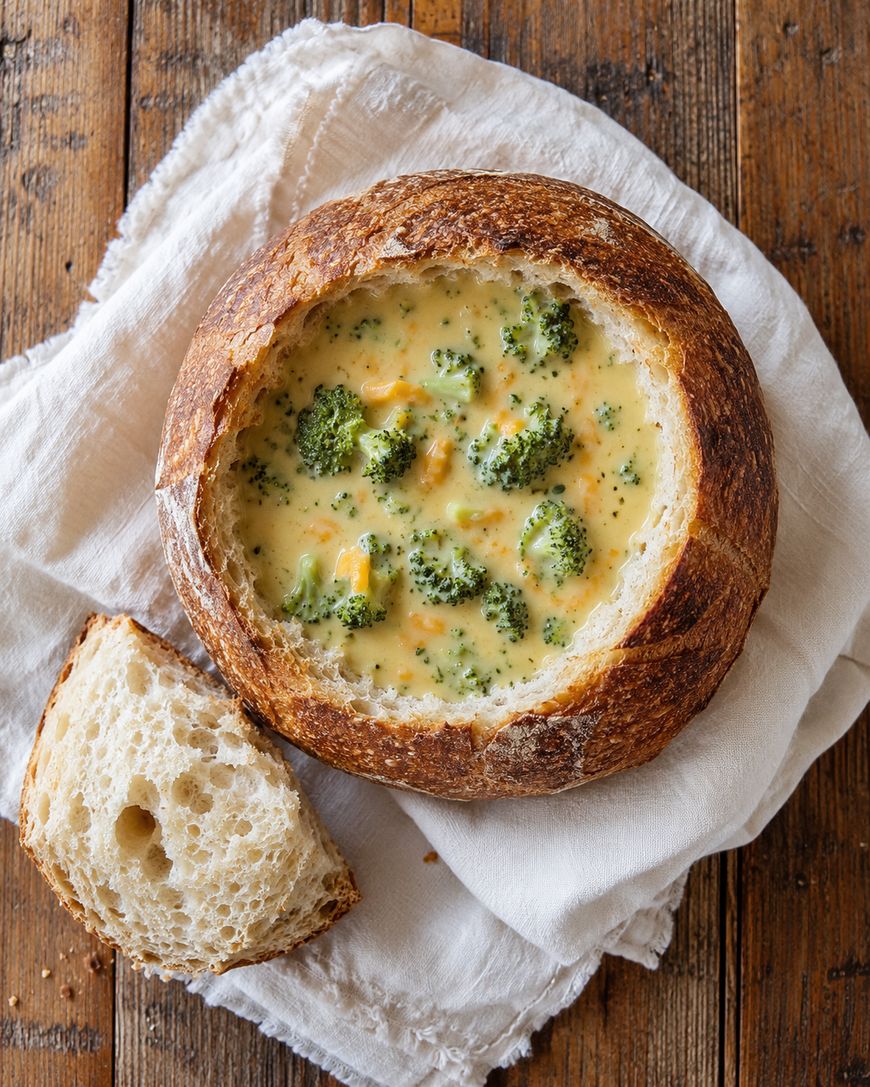
What Is a Bread Bowl
A bread bowl is a round, crusty loaf — typically sourdough — that is hollowed out to serve as an edible vessel for thick soups like clam chowder, broccoli cheddar, or French onion. The top is sliced off, the soft interior is pulled out, and hot soup is ladled directly inside.
The torn-out bread is never discarded. It is served on the side for dipping, which is arguably the best part of the entire meal.
Ingredients for Bread Bowls
The Flour
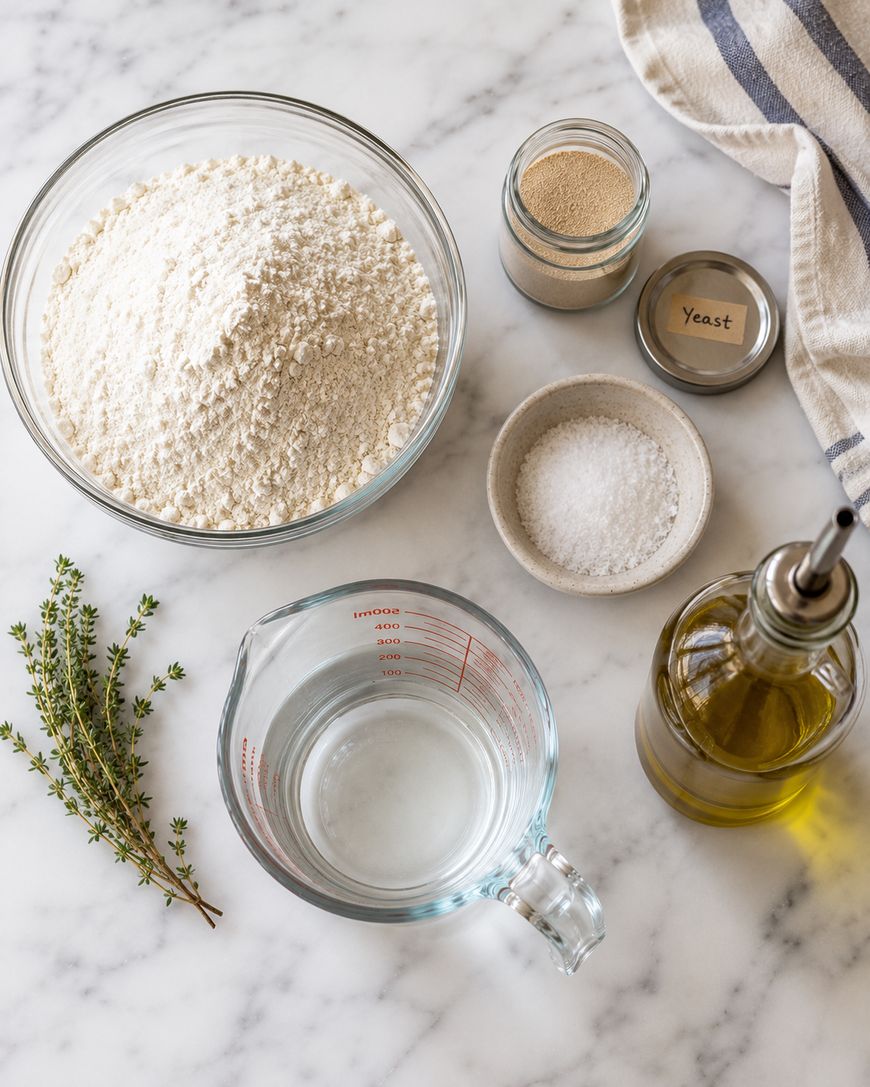
Bread flour is the correct choice here, not all-purpose. The higher protein content — typically 12 to 14 percent — develops more gluten, which gives the finished bowls the chew and structure needed to hold liquid without going soggy.
King Arthur Bread Flour is widely available and consistently reliable. If bread flour is unavailable, unbleached all-purpose flour will work, but expect slightly less chew and a thinner crust.
The Yeast
Active dry yeast and instant yeast both work for this recipe, though instant yeast does not require proofing and can be mixed directly into the dry ingredients. One packet (2 and a quarter teaspoons) handles up to four cups of flour without issue.
For a more complex flavor that mimics authentic sourdough bakeries, a small amount of white vinegar or buttermilk added to the dough adds noticeable tang without the weeks-long commitment of maintaining a starter.
Water Temperature
Water between 100 and 110 degrees Fahrenheit activates yeast without killing it. Too cold and the yeast will not bloom; too hot and it dies. A kitchen thermometer removes all guesswork, and the investment is worth it for consistent results.
Salt and Oil
Kosher salt is preferred over table salt because it dissolves more evenly into the dough. Two teaspoons is standard for this quantity; under-salted bread tastes flat in a way that no amount of soup will mask.
A tablespoon of olive oil in the dough adds slight richness and helps keep the crust from becoming too brittle after baking.
How to Make Bread Bowls Step by Step
Making the Dough
Combine warm water and yeast in a large bowl and let it sit for five to ten minutes until the mixture is foamy and fragrant. This step confirms the yeast is alive before any flour goes in.
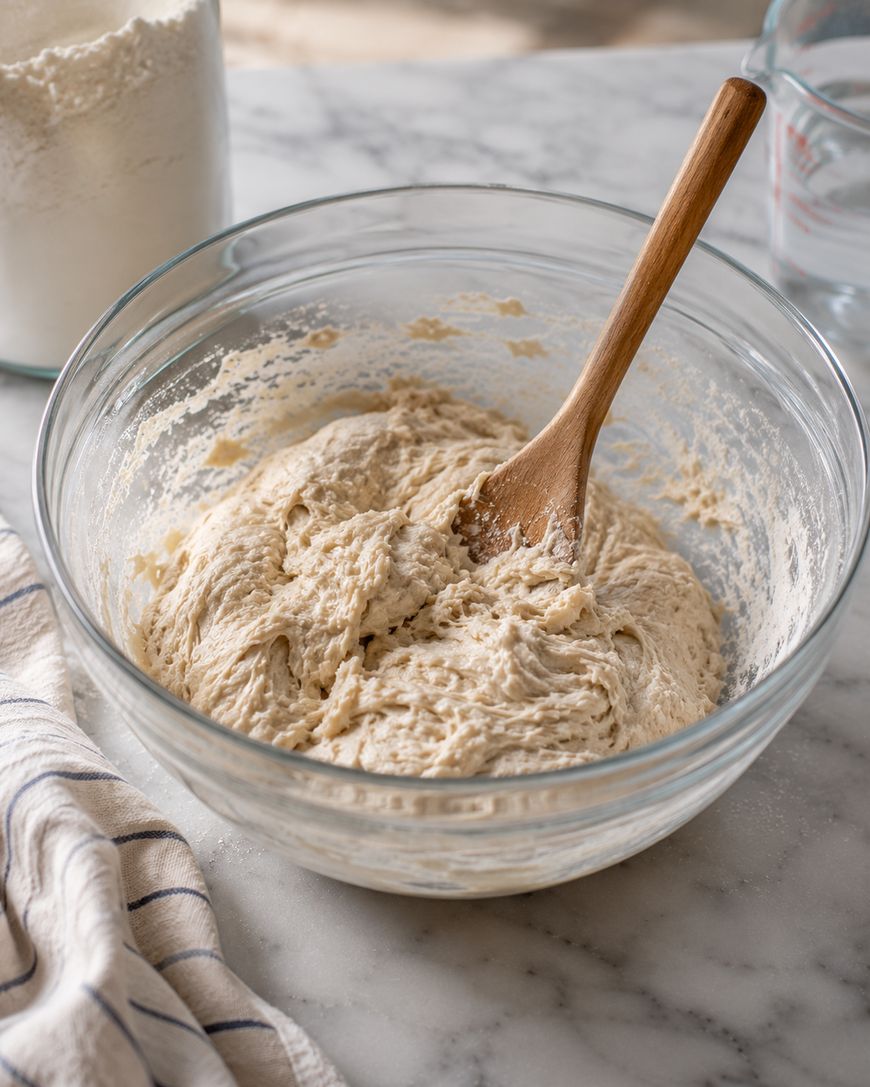
Add the flour, salt, and oil, then mix until a shaggy dough forms. Turn it out onto a lightly floured surface and knead for eight to ten minutes by hand, or four to five minutes in a stand mixer fitted with the dough hook. The dough is ready when it springs back when poked and passes the windowpane test — a small piece stretched thin enough to see light through without tearing.
The First Rise
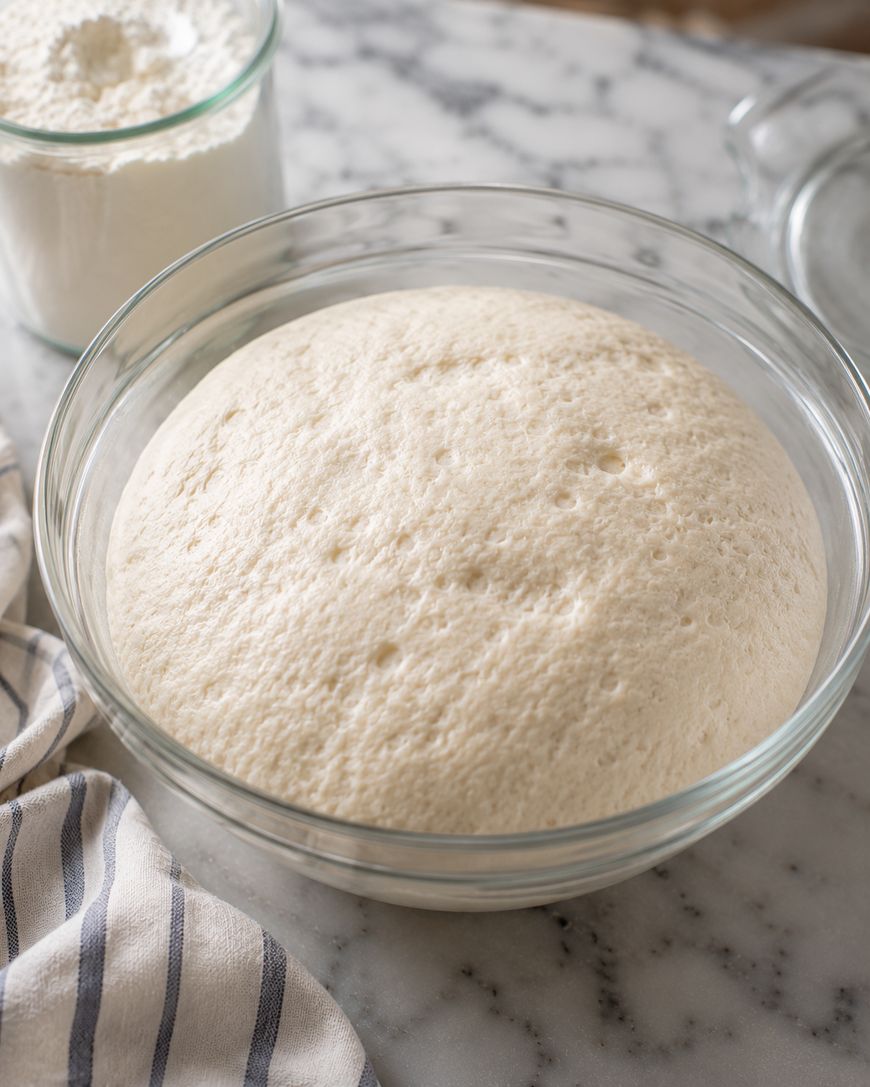
Place the dough in a lightly oiled bowl, cover with plastic wrap or a damp towel, and let it rise at room temperature until doubled in size. This takes roughly one to one and a half hours at 70 degrees Fahrenheit.
A cold kitchen will slow the rise considerably; placing the bowl in an oven with just the light on creates a reliably warm environment. Do not rush this stage — underproofed dough produces dense, gummy bread.
Shaping the Rounds
Punch the dough down gently to release gas, then divide it into four equal portions. Each portion should weigh approximately 250 to 275 grams if using a kitchen scale.
Shape each piece into a tight round ball by tucking the edges underneath and rolling the dough on an unfloured surface in a circular motion, using the friction of the counter to build tension. Proper tension is what gives the bowl its dome shape and keeps it from spreading flat in the oven.
The Second Rise
Place the shaped rounds on parchment-lined baking sheets, spaced at least three inches apart. Cover loosely and let them proof for another 45 to 60 minutes, until noticeably puffy but not fully doubled.
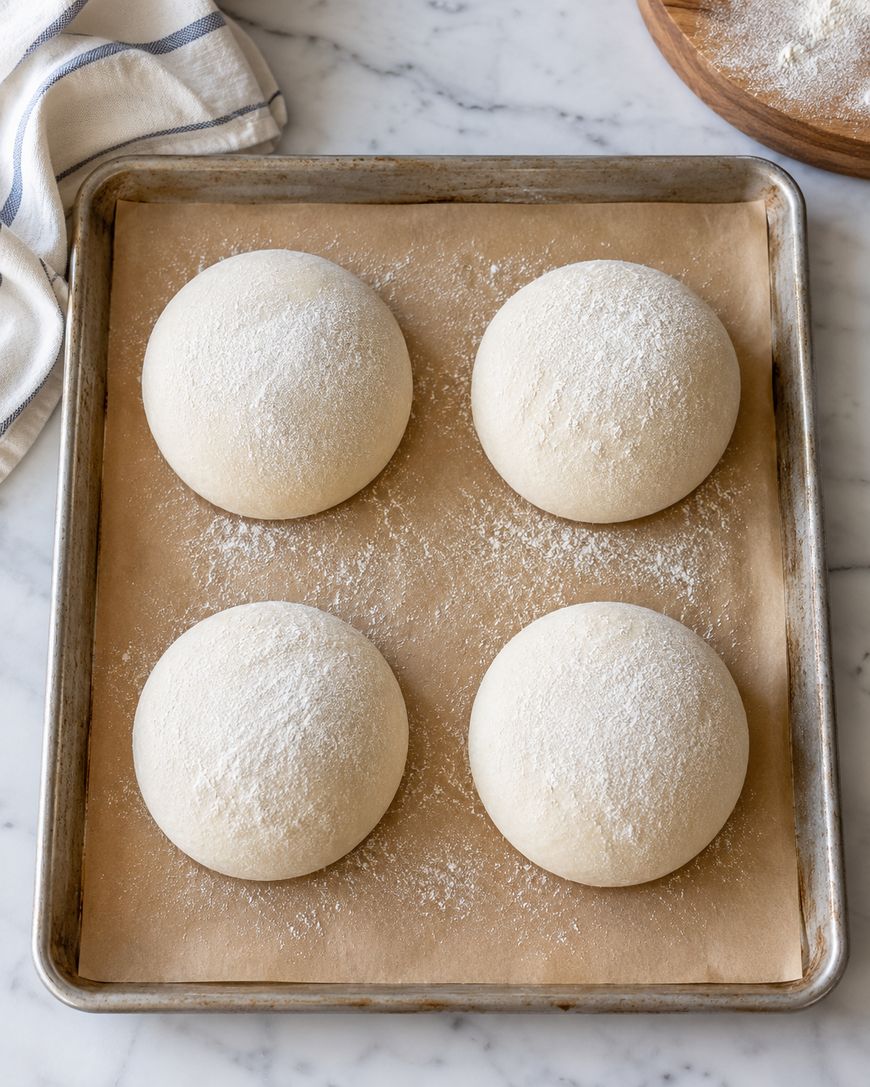
Slightly underproofing at this stage — known as the bulk fermentation endpoint — actually benefits oven spring, the dramatic burst of growth that happens in the first ten minutes of baking.
Scoring and Baking
Preheat the oven to 425 degrees Fahrenheit for at least 30 minutes before baking. A hot oven is non-negotiable for a thick, crackling crust.
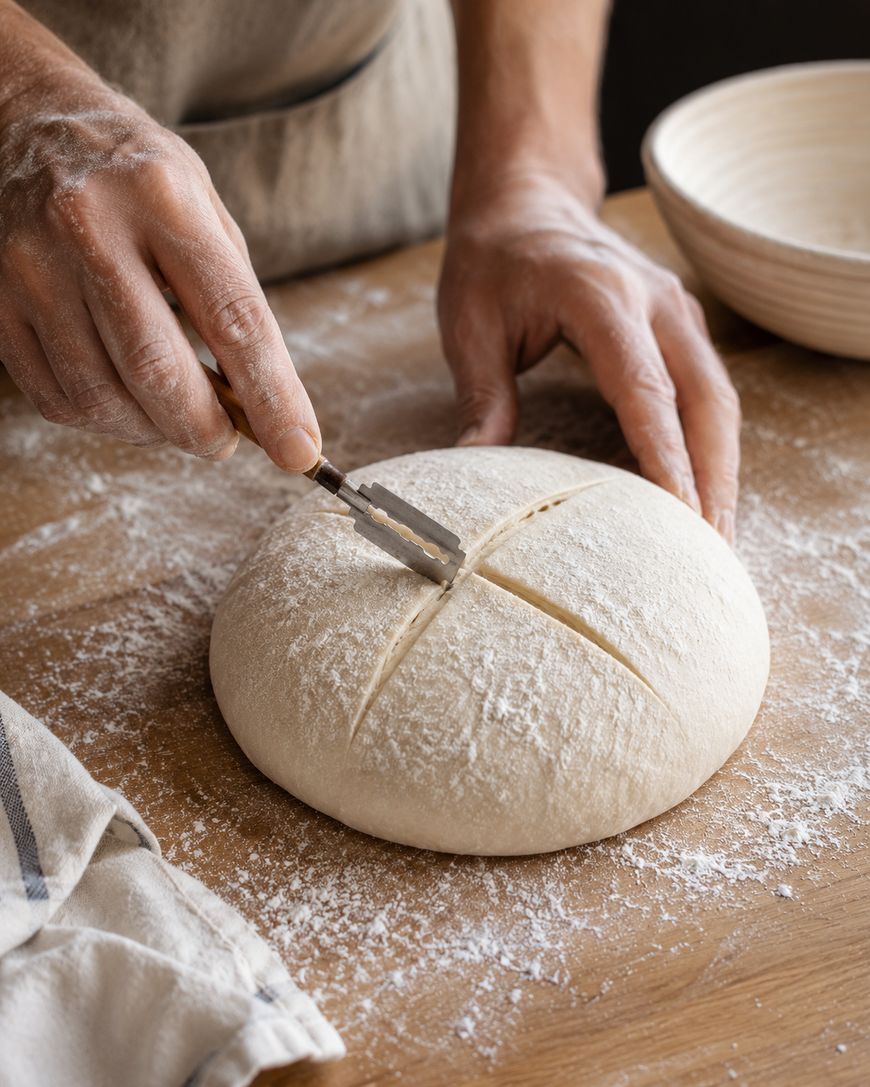
Just before loading the loaves, use a sharp knife or bread lame to score an X or cross pattern across the top of each round. This is not decorative — it controls where the bread expands and prevents random blowouts.
Steam is the other critical variable. Place a shallow pan on the oven floor, and when the bread goes in, pour one cup of boiling water into the pan and close the door immediately. The steam keeps the outer crust soft long enough for maximum oven spring, then the steam is allowed to escape and the crust dries to a crackling finish.
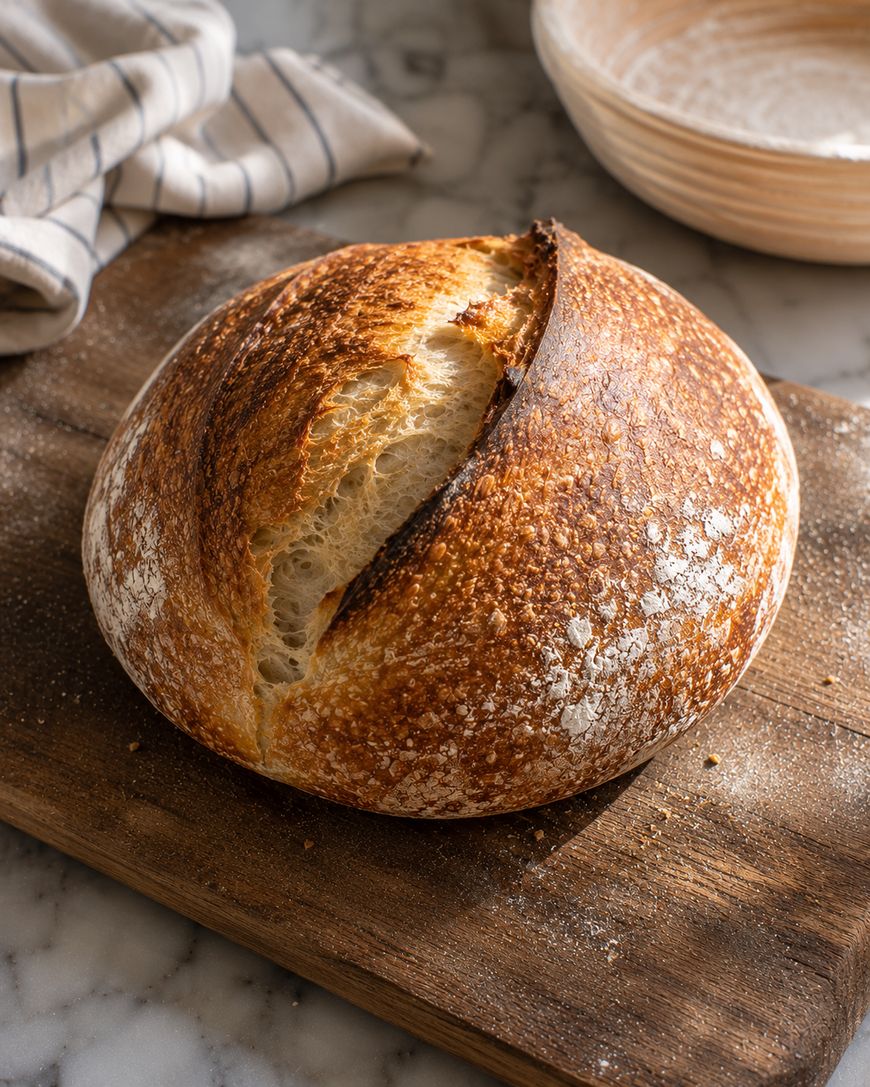
Bake for 25 to 30 minutes until deep golden brown, rotating the pans halfway through. The internal temperature should read 200 to 205 degrees Fahrenheit on an instant-read thermometer.
Hollowing the Bowls
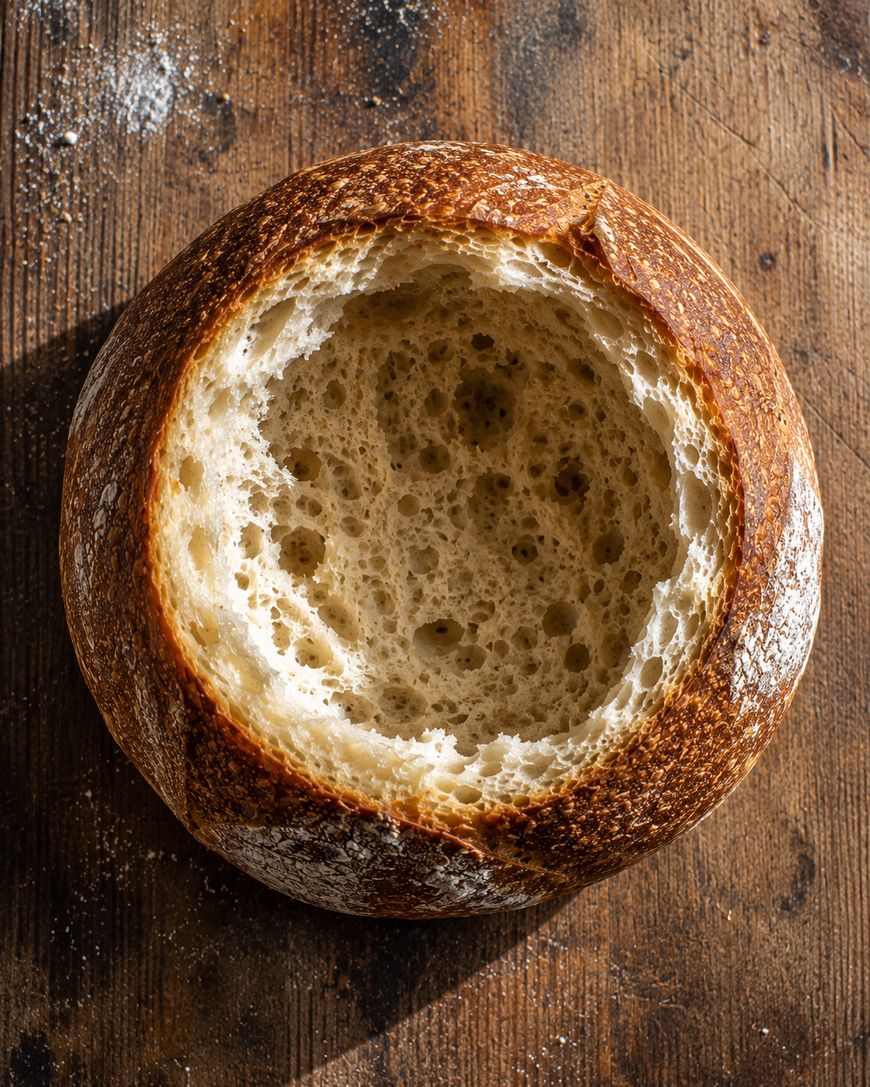
Let the loaves cool for at least 20 minutes before cutting. Hot bread is still setting its crumb structure, and cutting too soon turns the interior gummy.
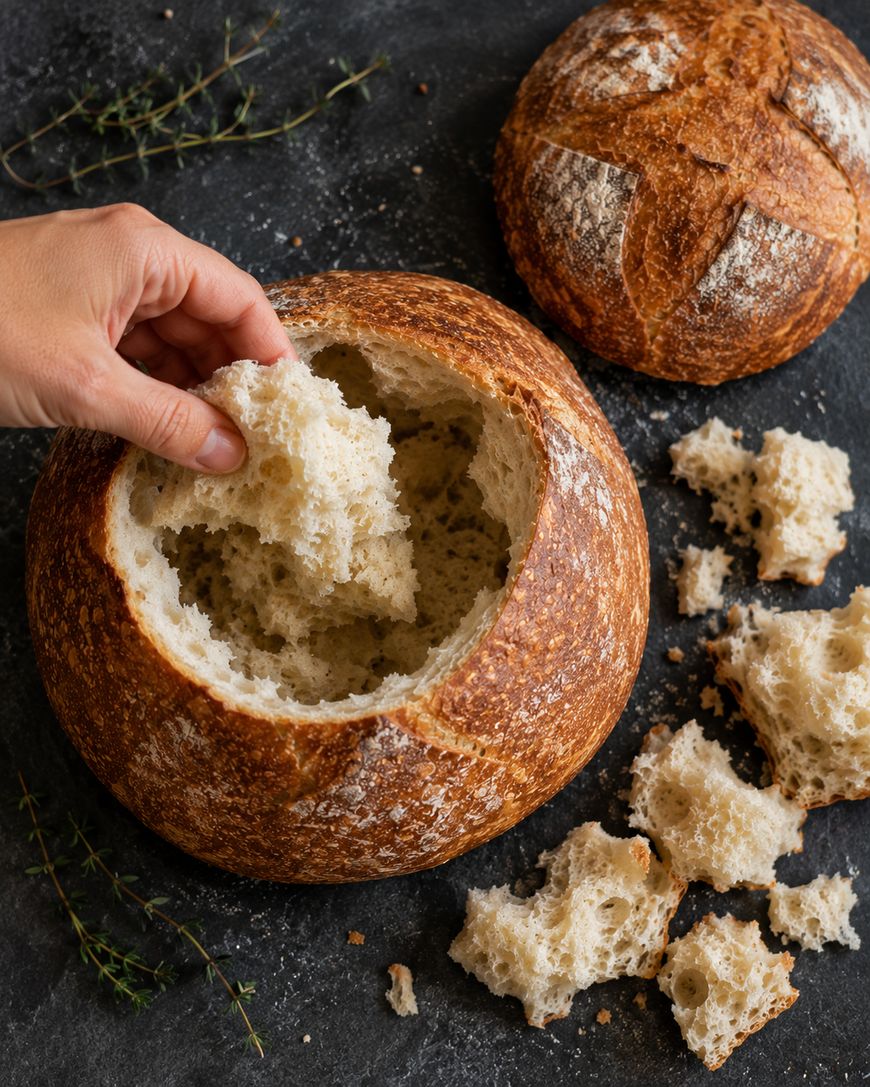
Slice off the top quarter of each loaf to create a lid. Use your fingers or a small spoon to pull out the soft interior, leaving a wall approximately three-quarters of an inch thick on all sides and the bottom.
Variations and Substitutions
Cheesy Bread Bowls
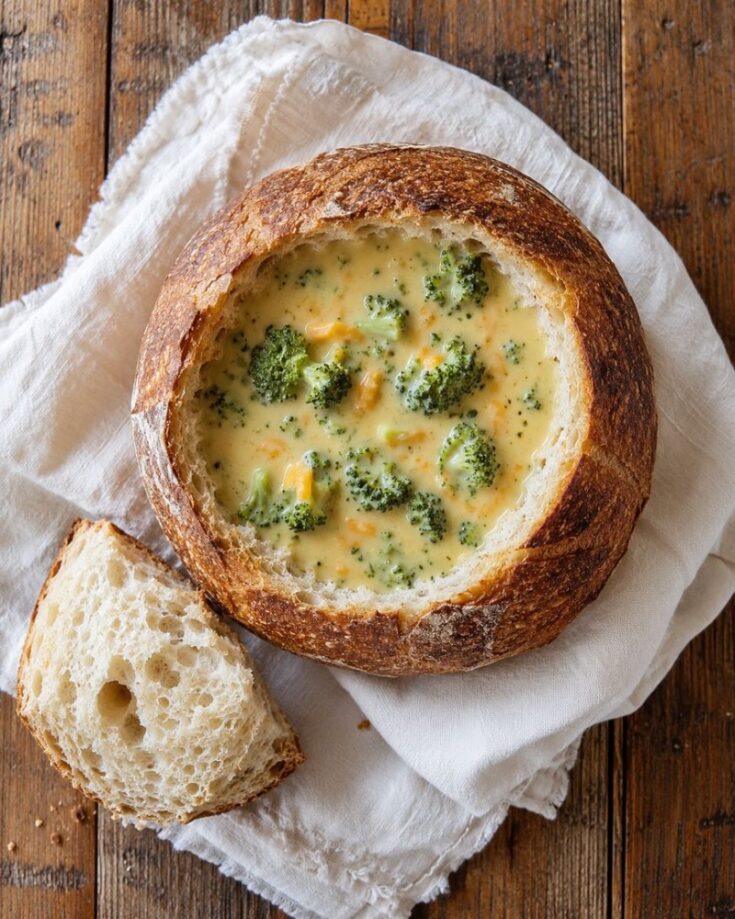
Grated Parmesan or shredded sharp cheddar can be incorporated directly into the dough at a rate of half a cup per batch. Alternatively, brush the shaped rounds with an egg wash and press shredded cheese onto the outside before the second rise, which creates a melted cheese crust that pairs particularly well with broccoli cheddar soup.
Whole Wheat Version
Replacing up to half the bread flour with whole wheat flour adds nutty flavor and a slightly denser texture. More than 50 percent whole wheat tends to make the dough heavy and the bowl prone to leaking.
Rosemary and Garlic
Kneading two teaspoons of dried rosemary and two minced garlic cloves into the dough transforms a plain bread bowl into something suited for tomato bisque or roasted red pepper soup. The garlic mellows considerably during baking and does not overpower.
Storage and Reheating
Unfilled bread bowls keep at room temperature for up to two days wrapped in a clean kitchen towel. Avoid plastic bags, which trap moisture and make the crust soft.
For longer storage, freeze hollowed bowls in a zip-lock bag for up to two months. Reheat directly from frozen in a 350-degree oven for 10 to 12 minutes. They emerge with a restored crust that is nearly indistinguishable from freshly baked.
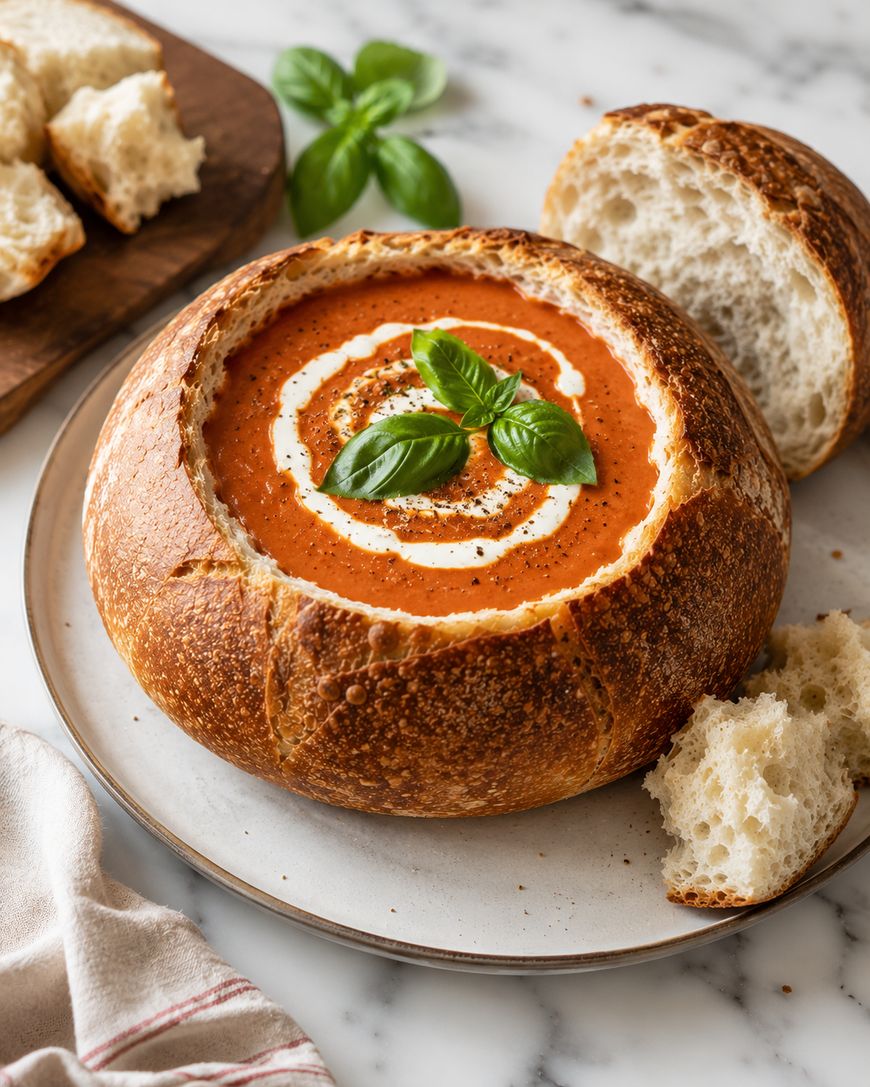
What to Serve in a Bread Bowl
Clam Chowder
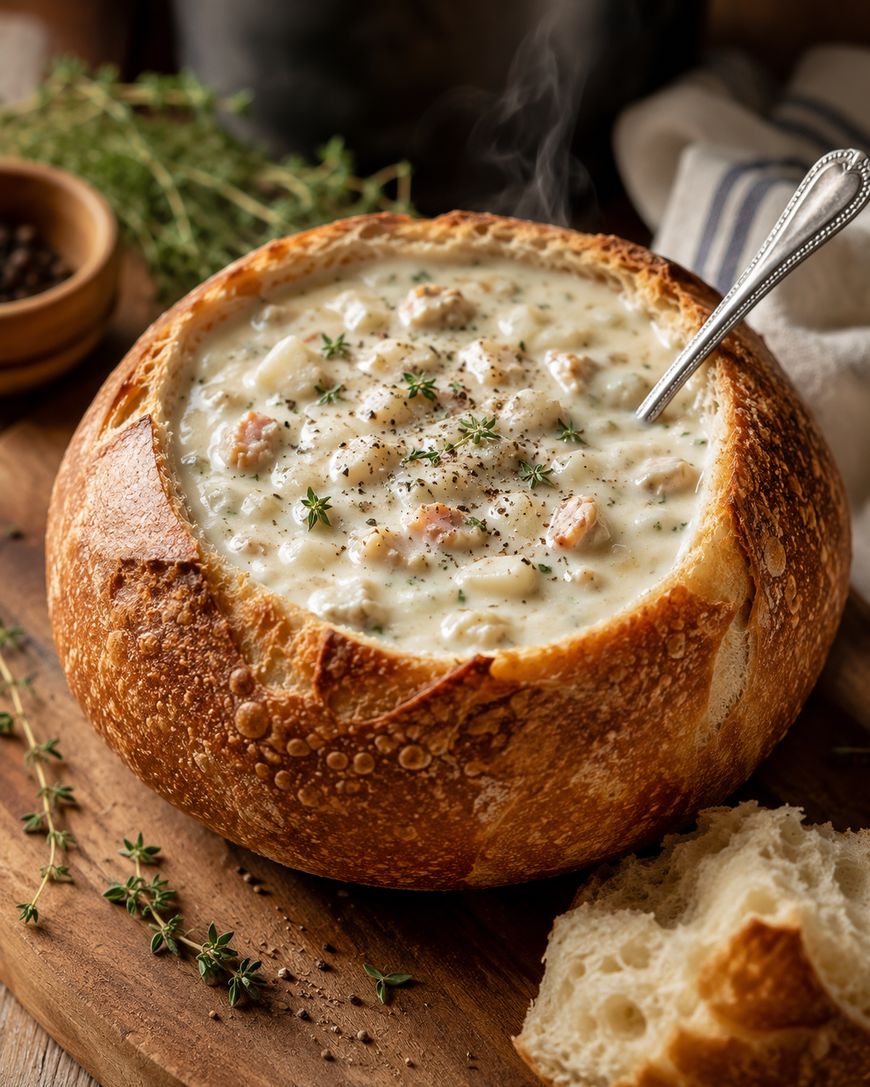
New England clam chowder is the most iconic pairing, famously served at Boudin Bakery in San Francisco and at Panera Bread locations nationwide. The thick, cream-based broth soaks slowly into the bread walls over the course of the meal.
Broccoli Cheddar Soup
Panera’s broccoli cheddar in a bread bowl is one of the most recognized fast-casual dishes in the United States. The cheesy, slightly thick consistency is ideal — it clings rather than runs, giving the bowl more time before the walls soften.
French Onion Soup
A bread bowl replaces the traditional crock in this variation, with melted Gruyere draped over the top and broiled briefly until bubbling. It is dramatic, practical, and reduces dishes.
The History of Bread Bowls
The practice of using bread as a vessel for food dates to medieval Europe, where trenchers — flat rounds of stale bread — served as edible plates. Thick bread bowls as a restaurant concept became widespread in the United States during the 1980s and 1990s, largely through Boudin Bakery’s San Francisco sourdough program, which had been producing bread in continuous operation since 1849.
Panera Bread popularized the format for mass-market audiences when it introduced its bread bowl program in the early 2000s, pairing it permanently with broccoli cheddar soup and clam chowder. The combination became one of the most replicated DIY recipes in American food blogging, as home cooks sought to recreate the experience for a fraction of the restaurant price.
The complete measurements, times, and nutrition information are in the recipe card below. Use it as a reference while cooking.
Bread Bowl Recipe
A homemade bread bowl recipe that produces thick-walled, crusty sourdough rounds perfect for clam chowder, broccoli cheddar soup, and more -- just like Panera Bread.
Ingredients
- 1 and 1/4 cups warm water (100 to 110 degrees Fahrenheit)
- 2 and 1/4 teaspoons active dry yeast (1 packet)
- 3 and 1/2 cups bread flour, plus more for kneading
- 2 teaspoons kosher salt
- 1 tablespoon olive oil
- 1 tablespoon white vinegar (for tang, optional)
- 1 cup boiling water (for oven steam)
Instructions
- Combine warm water and yeast in a large bowl. Let sit 5 to 10 minutes until foamy.
- Add flour, salt, olive oil, and vinegar if using. Mix until a shaggy dough forms.
- Turn dough onto a lightly floured surface and knead 8 to 10 minutes until smooth and elastic, passing the windowpane test.
- Place dough in a lightly oiled bowl, cover, and let rise 1 to 1.5 hours at room temperature until doubled.
- Punch dough down and divide into 4 equal portions (about 260g each).
- Shape each portion into a tight round ball, using counter friction to build surface tension.
- Place rounds on parchment-lined baking sheets. Cover and proof 45 to 60 minutes until puffy.
- Preheat oven to 425 degrees Fahrenheit with a shallow pan on the oven floor.
- Score an X across the top of each round with a sharp knife.
- Load bread into the oven, pour 1 cup boiling water into the bottom pan, and close the door immediately.
- Bake 25 to 30 minutes until deep golden brown and internal temperature reads 200 to 205 degrees Fahrenheit.
- Cool at least 20 minutes. Slice off the top quarter of each loaf.
- Pull out the soft interior, leaving walls about 3/4 inch thick. Fill with hot soup and serve immediately.
Notes
For a stronger sourdough flavor, substitute 100g active sourdough starter for the yeast and reduce water by 50g. Expect a 4 to 8 hour first rise.
Unfilled bowls freeze well for up to 2 months. Reheat from frozen at 350 degrees for 10 to 12 minutes.
Do not fill bowls until immediately before serving to prevent soggy walls.
Nutrition Information:
Yield:
4Serving Size:
1 bread bowlAmount Per Serving: Calories: 420Total Fat: 5gSaturated Fat: 1gSodium: 590mgCarbohydrates: 80gFiber: 3gSugar: 2gProtein: 14g
This site provides estimated nutritional information. This information comes from online calculators. Although we try to provide accurate nutritional information, these figures are only estimates.
Frequently Asked Questions
What soup is best in a bread bowl?
Thick, cream-based soups work best because they absorb into the bread slowly rather than soaking through immediately. New England clam chowder, broccoli cheddar, and potato soup are the classic choices. Thin broths like French onion or chicken noodle will soften the bowl walls within ten minutes, so they are better served if you plan to eat quickly or if you toast the interior walls in the oven before filling.
Can bread bowls be made ahead of time?
Yes — the bowls can be baked, hollowed, and frozen up to two months in advance. Reheat directly from frozen at 350 degrees Fahrenheit for 10 to 12 minutes before serving. For same-day use, they are best made the morning of and left at room temperature until needed. Do not refrigerate, as cold storage accelerates staleness without the preservation benefits of freezing.
Why is my bread bowl spreading flat instead of rising up?
Flat loaves almost always point to one of two causes: insufficient dough tension during shaping, or overproofing during the second rise. When shaping, drag each round firmly against an unfloured counter to build surface tension. For the second rise, check at 45 minutes — the dough should be puffy but still spring back slowly when pressed. If it does not spring back at all, it has overproofed.
What is the best flour for bread bowls?
Bread flour with a protein content of 12 to 14 percent produces the strongest gluten network and the chewiest, most structural crust. King Arthur Bread Flour and Bob’s Red Mill Artisan Bread Flour are both consistent performers available at most grocery stores. All-purpose flour is an acceptable substitute but will produce a softer, less chewy result that is more prone to soaking through when filled.
How thick should the walls of a bread bowl be?
Leave at least three-quarters of an inch of bread on all sides and the bottom. Thinner walls soak through within minutes. When hollowing, work slowly with your fingers rather than a spoon to maintain even thickness. If one wall feels significantly thinner than the others, reinforce it by leaving slightly more bread in that area.
Can this bread bowl recipe be made with sourdough starter?
Absolutely. Replace the commercial yeast with 100 grams of active, bubbly sourdough starter and reduce the water in the recipe by 50 grams to account for the hydration in the starter. The flavor will be noticeably tangier and more complex. The fermentation timeline will also be longer — expect a four to eight hour first rise at room temperature, or an overnight cold ferment in the refrigerator for even deeper flavor.
Conclusion
This bread bowl recipe delivers the same thick-walled, crusty sourdough rounds that made Panera Bread and Boudin Bakery famous — built from pantry staples and ready in a single afternoon. Whether filled with clam chowder, broccoli cheddar, or a smoky loaded potato soup, homemade bread bowls turn an ordinary weeknight dinner into something worth remembering.