Last updated: November 1, 2026
This eggnog pie bakes into a silky, nutmeg-scented custard inside a crisp buttery crust, and it tastes like the holidays in a single slice. The full recipe card is further down the page, but the walkthrough right here covers every step so you can bake it with confidence.

How to Make Eggnog Pie Step by Step
Eggnog pie comes together in five simple stages: blind bake the crust, whisk the custard, bake until the center reaches 160°F, chill until firm, and top with whipped cream. The whole process takes roughly 85 minutes of prep and baking, followed by a long chill, and nothing about it is tricky.
Gather What You Need
You need one unbaked 9-inch deep-dish pie crust, 2 cups of full-fat store-bought eggnog, 3 large eggs, 1/3 cup of granulated sugar, 1 teaspoon of vanilla extract, 1/2 teaspoon of ground nutmeg, and 1/4 teaspoon of salt.

For the topping you need 1 cup of cold heavy cream, 2 tablespoons of powdered sugar, 1/2 teaspoon of vanilla extract, and a pinch of freshly grated nutmeg.
Blind Bake the Crust
Preheat the oven to 375°F, press the crust into a 9-inch deep-dish pie dish, and crimp the edge. Prick the bottom all over with a fork, line the crust with parchment paper, and fill it with pie weights or dried beans.

Bake the crust for 15 minutes, then lift out the parchment and weights. Bake it for 5 more minutes until the bottom looks dry and pale golden, and reduce the oven temperature to 350°F.

Whisk the Eggnog Custard
Whisk the eggs, granulated sugar, salt, and ground nutmeg in a large bowl until the mixture looks smooth and slightly pale. Slowly whisk in the eggnog and 1 teaspoon of vanilla so you do not build up a layer of foam.

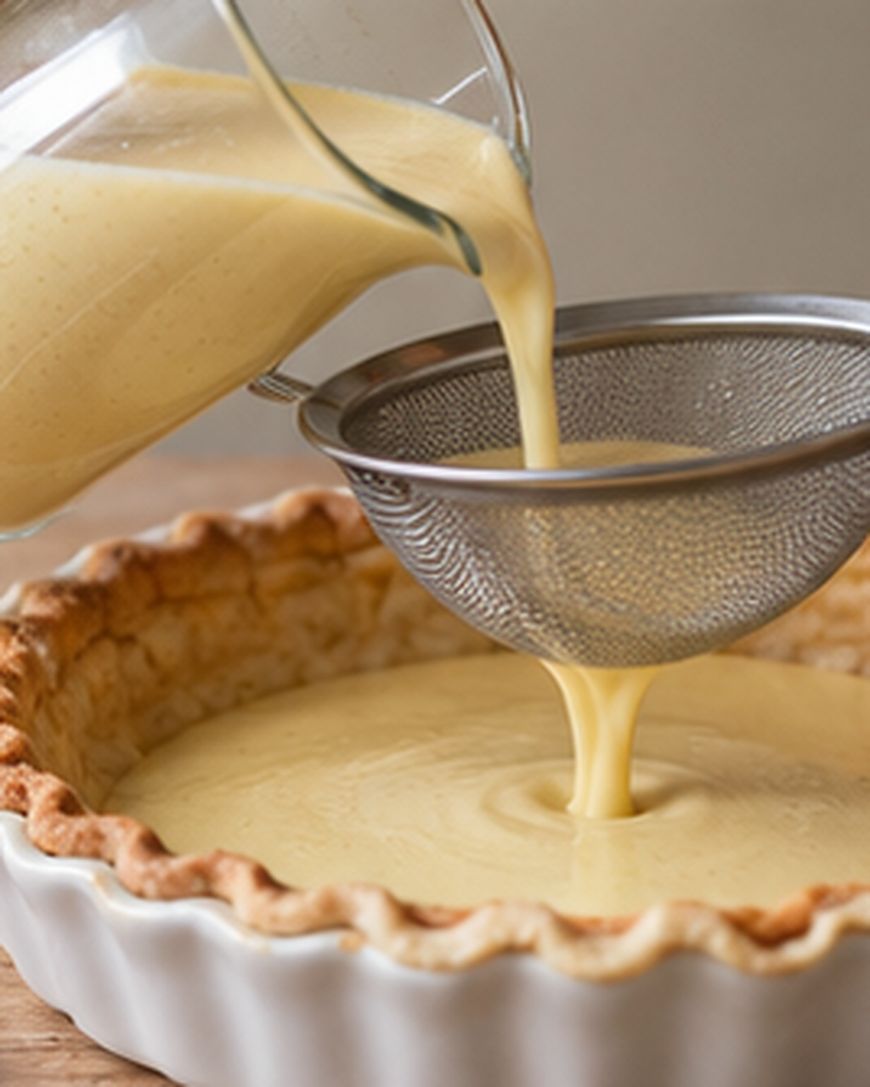
Pour the mixture through a fine mesh sieve into a large measuring jug. Straining catches stray bits of egg white, which gives you a smoother filling and a cleaner slice.
Bake Until the Center Reaches 160°F
Set the warm crust on a baking sheet on the middle oven rack and carefully pour in the custard. Cover the crust edge with foil strips or a pie shield so it does not brown too fast.
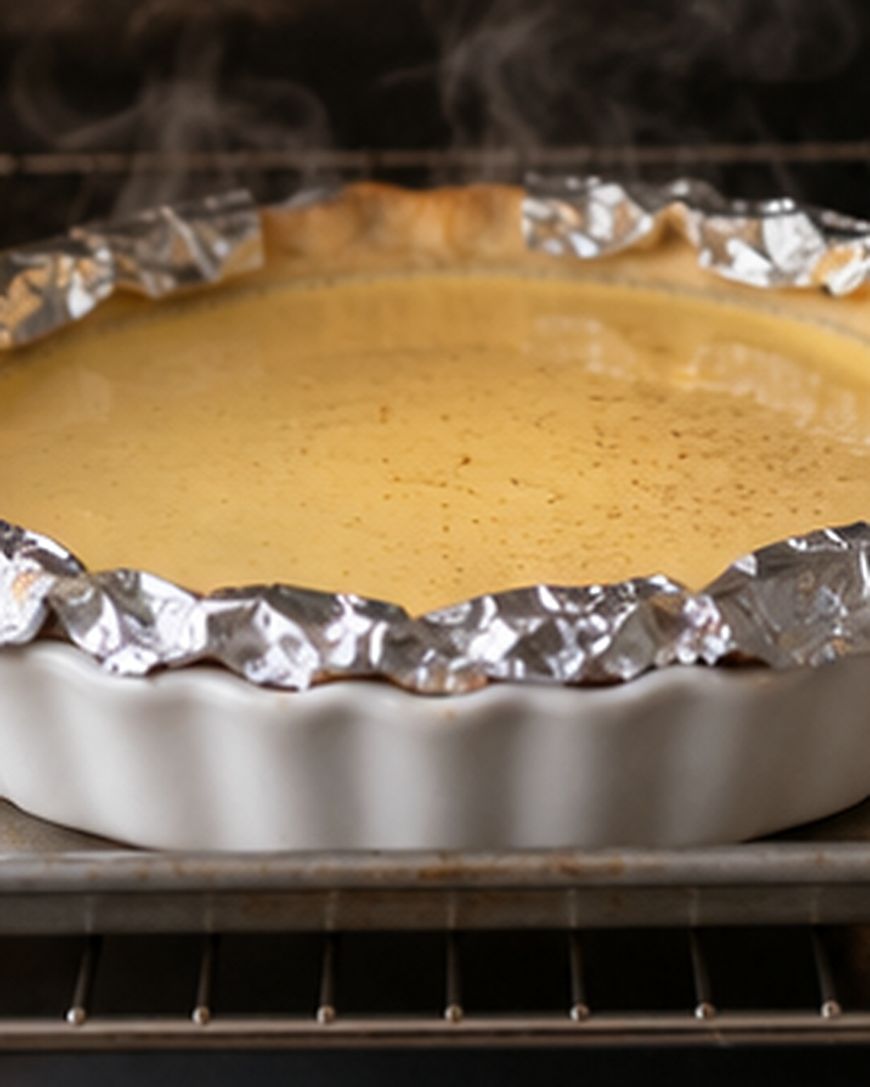
Bake at 350°F for 40 to 45 minutes, until the edges are set and the center jiggles slightly like gelatin. An instant-read thermometer in the center should read 160°F, which is the temperature the USDA Food Safety and Inspection Service recommends for egg dishes.
Cool and Chill the Pie
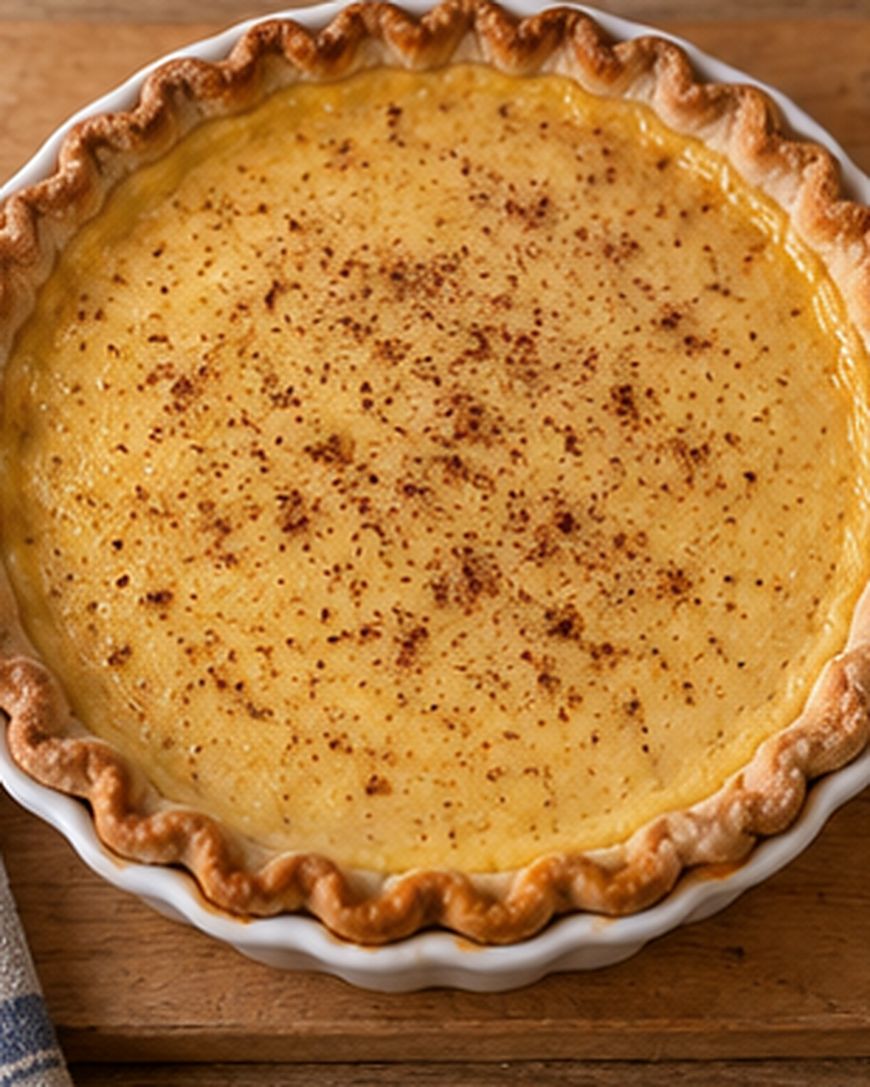
Move the pie to a wire rack and let it cool for 1 hour. Then refrigerate it for at least 4 hours, until the custard is fully set.
The USDA advises refrigerating egg-based desserts within 2 hours of baking, so do not leave the pie on the counter longer than that.
Whip the Cream and Serve
Beat the cold heavy cream, powdered sugar, and 1/2 teaspoon of vanilla until soft peaks form. Spread or dollop the cream over the chilled pie and finish with freshly grated nutmeg.
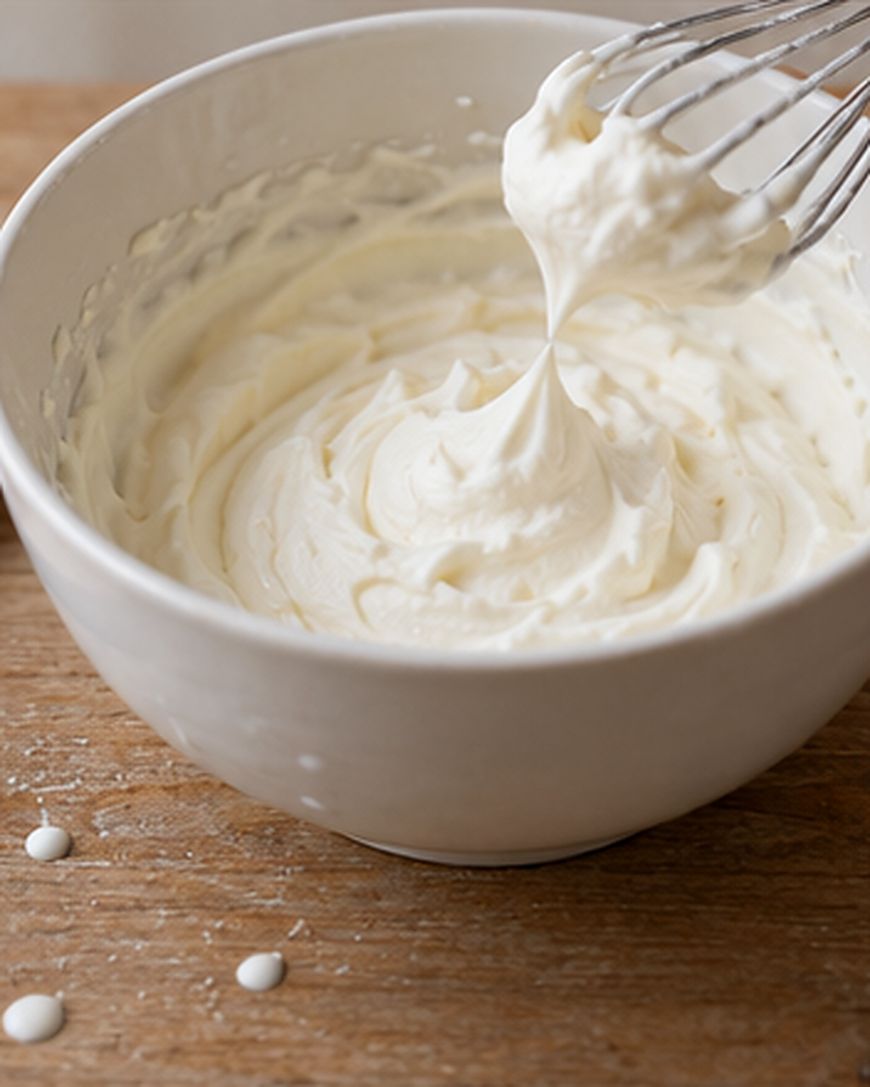
Slice the pie with a sharp knife, wiping the blade between cuts for tidy edges. A clean slice shows off the pale, creamy custard against the golden crust.
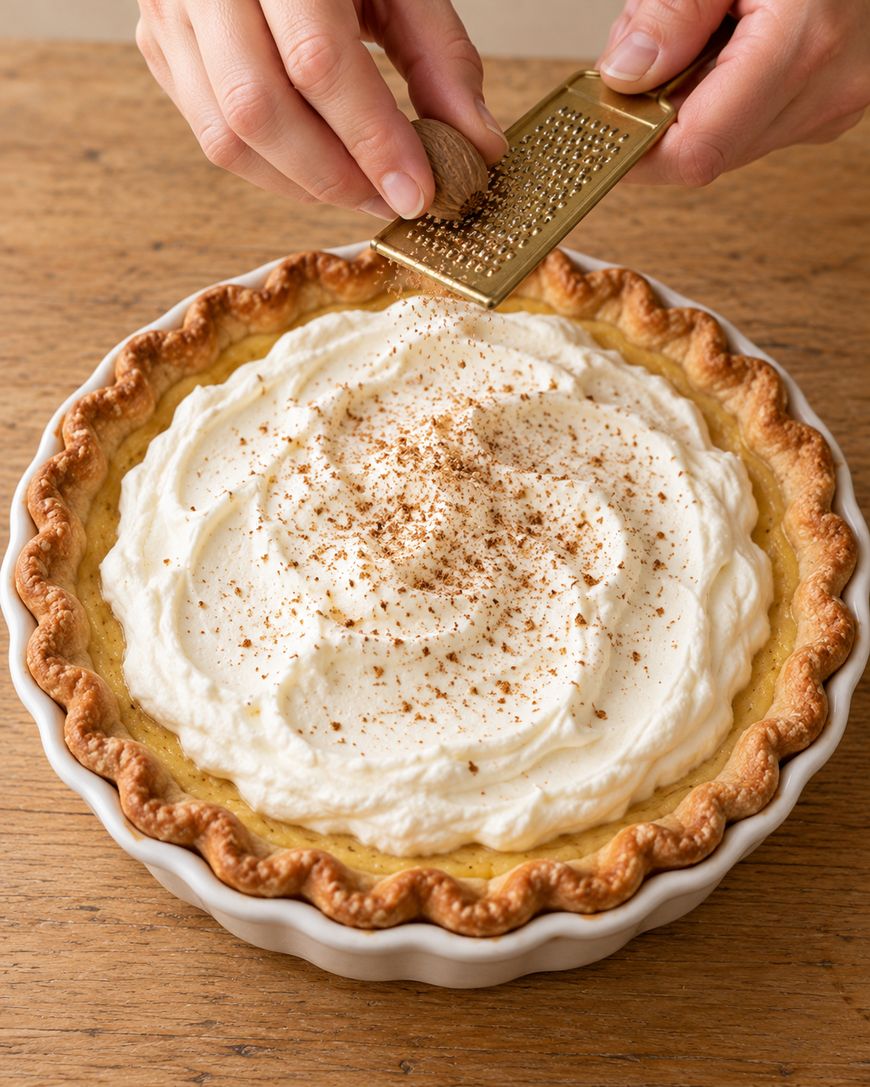
Eggnog Pie Ingredients and Substitutions
The best eggnog pie uses full-fat store-bought eggnog, fresh eggs, and a sturdy pastry crust. A few swaps work well, but each one shifts the texture or flavor a little.
Choosing the Right Eggnog
Pick a classic full-fat, pasteurized eggnog from the refrigerated dairy case, such as Horizon Organic or Land O’Lakes. The richness of these nogs gives the custard a creamy body that holds a neat slice.
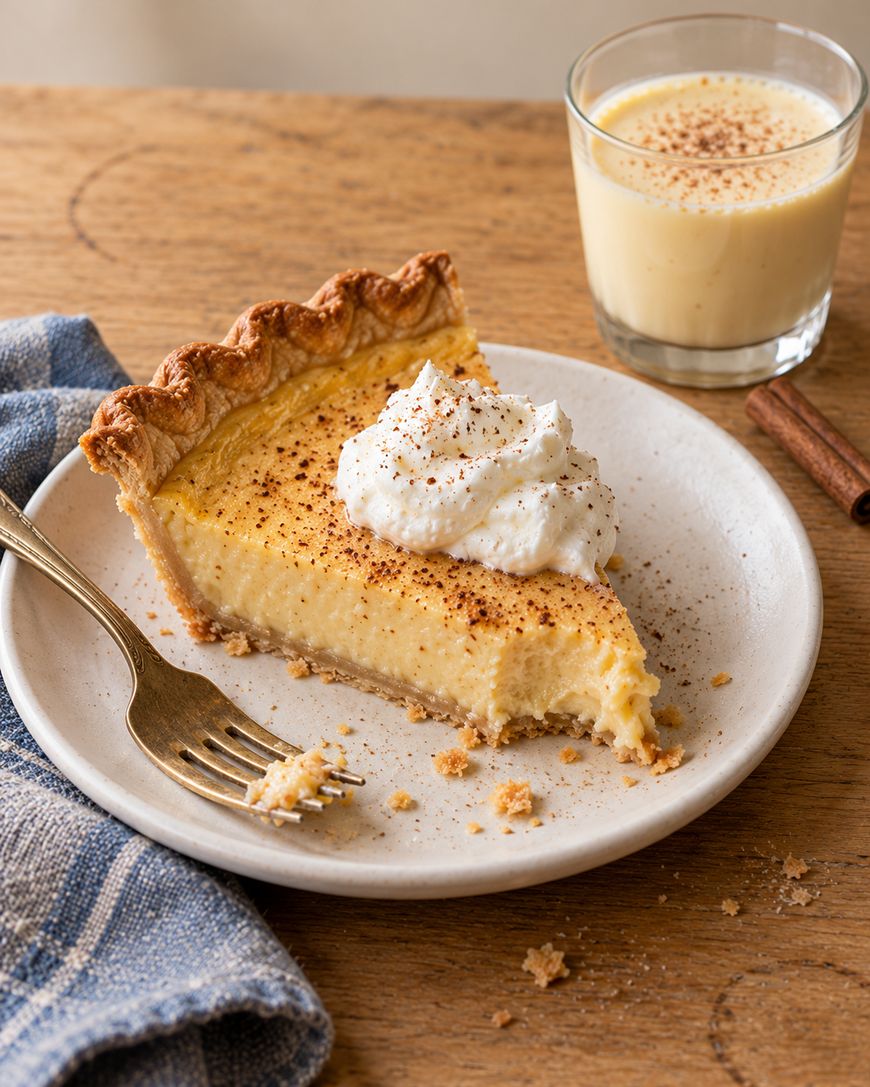
Light or reduced-fat eggnog has less richness and can give a slightly softer set, so it is best to stick with the full-fat kind. Homemade eggnog also works if it is thin and pourable, and the pie still bakes to 160°F either way.
Crust Options
A refrigerated roll-out crust from Pillsbury saves time and bakes up crisp and flaky. A homemade all-butter crust adds a richer flavor if you have the time.
A graham cracker crust is a tasty alternative that pairs well with nutmeg. The card below uses a classic pastry crust, so treat the graham version as a variation and bake the pressed crumb crust for about 8 minutes at 350°F before adding the filling.
Optional Flavor Add-Ins
A pinch of ground cinnamon, about 1/8 teaspoon, adds extra warmth to the custard. The card leaves it out, so treat it as optional.
A 1/2 teaspoon of rum extract gives the pie a classic spiked eggnog aroma without any alcohol. The card leaves this out too, so add it only if you like a bolder flavor.
Tips for a Silky, Crack-Free Eggnog Pie
A smooth eggnog pie comes down to gentle heat, a careful watch on the jiggle, and a slow cool. These small habits are what separate a silky custard from a cracked or weepy one.
Pull the Pie at the Jiggle
The center should wobble slightly when you nudge the pan, like set gelatin, and it will firm up fully as it chills. If the whole pie stays liquid and sloshes, give it another five minutes and check again.
Overbaked custard turns rubbery and can crack across the top. Using a thermometer takes the guesswork out, so check the center once the edges look set.
Keep the Crust Edge From Browning Too Fast
The crust has already baked for 20 minutes before the filling goes in, so the edge is the first part to darken. Foil strips or a silicone pie shield protect it for the rest of the bake.
If you do not have either, tear a sheet of foil, cut out the center, and fold the ring loosely over the rim.
Let the Pie Cool Gradually
Moving a hot custard straight into a cold fridge can cause condensation and cracks. Cooling on a wire rack for an hour first lets the filling settle gently.
Once the pie is cool, chill it uncovered for the first hour so the surface stays dry. Then cover it loosely if you are keeping it overnight.
Storing and Making Eggnog Pie Ahead
Eggnog pie keeps covered in the refrigerator for up to 3 days, which makes it a great make-ahead holiday dessert. Bake and chill the pie the day before, then add the whipped cream on the day you serve it.
The whipped cream holds its shape best when it is made fresh. If you must top the pie early, stabilize the cream by chilling the bowl and beaters first.
Do not freeze eggnog pie. Egg custards weep and turn grainy after thawing, so the texture is never as silky as a freshly chilled slice.
Serving Ideas for Eggnog Pie
Eggnog pie looks best with a cloud of whipped cream and a generous dusting of freshly grated nutmeg. A whole nutmeg and a fine grater make the aroma noticeably stronger than the jarred kind.
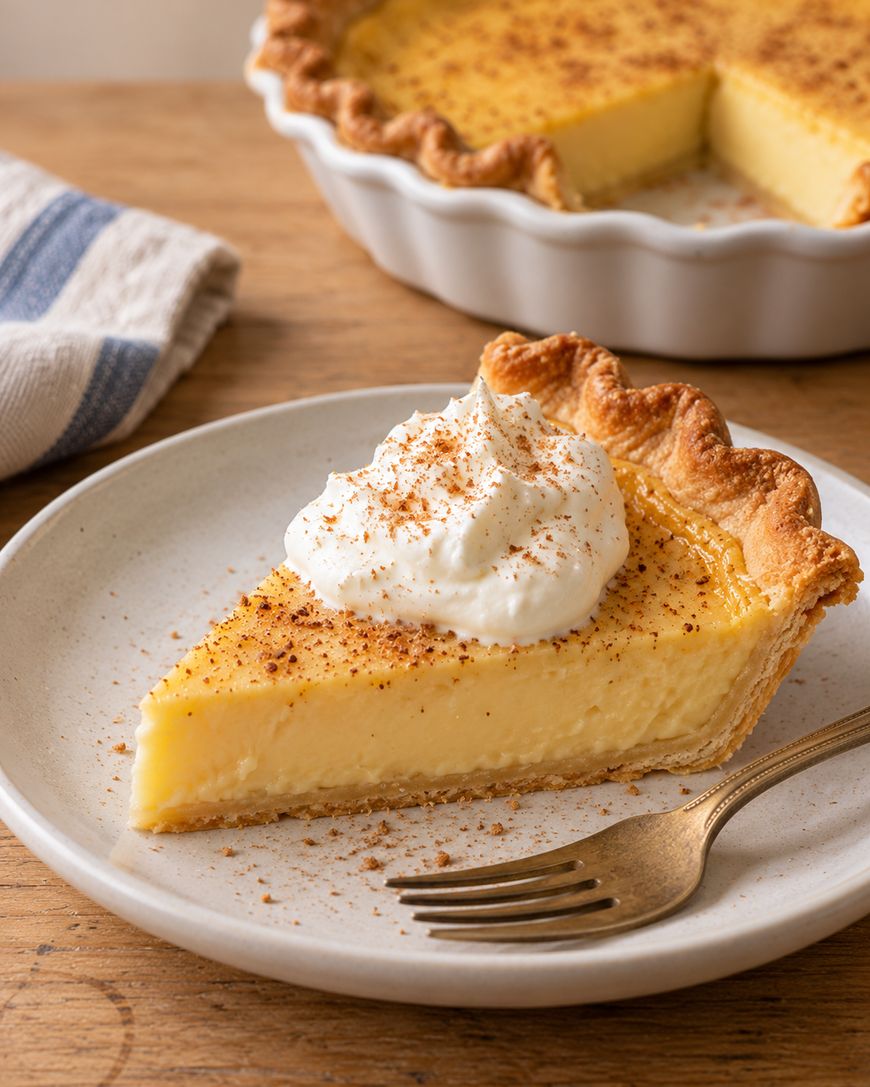
For a festive table, scatter a few fresh cranberries or add a cinnamon stick beside each slice. A hot cup of coffee or spiced tea balances the sweetness nicely.
This pie fits right alongside other holiday desserts, from pecan pie to gingerbread. Cut it into 8 slices and it is easy to serve at a party, since the chilled custard holds its shape on a plate.
The Story Behind Eggnog Pie
Eggnog is often traced back to medieval British drinks like posset, a warm mix of milk and wine or ale. It became a holiday tradition in colonial America, where rum was easier to find than brandy.
Custard pies have an equally long history in English kitchens, where eggs and milk were baked in pastry. Eggnog pie simply brings the two traditions together, turning a seasonal drink into a sliceable dessert.
The pie is also a smart way to use up leftover eggnog from the holiday season. The nutmeg-forward flavor tastes like the drink, only creamier and set into a silky slice.
Ready to bake? Use the recipe card below for the full ingredient list, steps, and nutrition details.
Eggnog Pie
A silky, nutmeg-scented eggnog custard baked in a crisp buttery crust and finished with fresh whipped cream. Make it a day ahead for an easy holiday dessert.
Ingredients
- 1 unbaked 9-inch deep-dish pie crust
- 2 cups full-fat store-bought eggnog
- 3 large eggs
- 1/3 cup granulated sugar
- 1 teaspoon vanilla extract
- 1/2 teaspoon ground nutmeg
- 1/4 teaspoon salt
- 1 cup cold heavy cream
- 2 tablespoons powdered sugar
- 1/2 teaspoon vanilla extract
- Pinch of freshly grated nutmeg
Instructions
- Preheat the oven to 375°F. Press the pie crust into a 9-inch deep-dish pie dish, crimp the edge, and prick the bottom all over with a fork.
- Line the crust with parchment paper, fill it with pie weights or dried beans, and bake for 15 minutes.
- Remove the parchment and weights, then bake the crust for 5 more minutes until the bottom looks dry and pale golden. Reduce the oven temperature to 350°F.
- In a large bowl, whisk the eggs, granulated sugar, salt, and ground nutmeg until smooth and slightly pale.
- Slowly whisk in the eggnog and 1 teaspoon vanilla until combined, then pour the mixture through a fine mesh sieve into a large measuring jug.
- Set the warm crust on a baking sheet on the middle oven rack, carefully pour in the custard, and cover the crust edge with foil strips or a pie shield.
- Bake at 350°F for 40 to 45 minutes, until the edges are set, the center jiggles slightly, and an instant-read thermometer in the center reads 160°F.
- Cool the pie on a wire rack for 1 hour, then refrigerate for at least 4 hours until fully set.
- Beat the cold heavy cream, powdered sugar, and 1/2 teaspoon vanilla until soft peaks form. Spread over the chilled pie and finish with freshly grated nutmeg.
Notes
Use full-fat, pasteurized eggnog for the best set. Store the pie covered in the refrigerator for up to 3 days and add the whipped cream on the day you serve it. Do not freeze. The USDA recommends cooking egg dishes to 160°F.
Nutrition Information:
Yield:
8Serving Size:
1 sliceAmount Per Serving: Calories: 345Total Fat: 20gSaturated Fat: 10gSodium: 235mgCarbohydrates: 36gFiber: 0gSugar: 21gProtein: 6g
Eggnog Pie Questions
Do you have to blind bake the crust?
Yes, because a custard this wet will leave an underbaked crust soggy. Baking the shell for 20 minutes first keeps the bottom crisp.
Can you use homemade eggnog?
Yes, as long as it is thin and pourable like the dairy case kind. The pie bakes to 160°F either way, but store-bought eggnog gives the most predictable thickness.
Why did the eggnog pie crack?
Cracks almost always mean the custard baked too long or cooled too fast. Pull the pie when the center still jiggles slightly, then let it cool on a wire rack for an hour before chilling.
How far ahead can you make eggnog pie?
You can bake and chill the pie up to 3 days ahead. Add the whipped cream on the day you serve it for the best look and texture.
Can you freeze eggnog pie?
Freezing is not recommended, because egg custards turn watery and grainy once thawed. Keep leftovers covered in the refrigerator and enjoy them within 3 days.
Why This Eggnog Pie Recipe Works
The filling uses 3 eggs for every 2 cups of eggnog, a classic custard ratio that sets silky and sliceable. Because the eggnog already contains cream and egg yolks, the custard tastes rich without any extra butter or cream.
Blind baking the crust for 20 minutes creates a crisp base that stands up to the wet filling. Straining the custard through a fine mesh sieve removes stray egg white, which keeps the texture smooth from edge to center.
A moderate 350°F oven cooks the custard gently, and the thermometer check at 160°F means the eggs are fully cooked and safe. Cooling for an hour and then chilling for at least 4 hours lets the filling finish setting, so every slice holds its shape.
Bake Your Eggnog Pie This Season
Eggnog pie is the easy holiday dessert that tastes far fancier than the effort it takes. Blind bake the crust, whisk the custard, bake to 160°F, and let the chill do the rest.
Save this recipe, bake the pie a day ahead, and top each slice with whipped cream and fresh nutmeg when it is time to celebrate.
Easy Eggnog Bread With a Tender Crumb and a Sweet Nutmeg Glaze