Last updated: June 17, 2026
Growing watermelons vertically is one of the smartest moves you can make in the garden, and these watermelon trellis ideas will show you exactly how to do it right. Whether you have a tiny backyard or a sprawling plot, training your vines upward saves space, improves air circulation, and makes harvest time so much easier.
We have rounded up 12 of the best watermelon trellis ideas — from simple DIY builds to clever repurposed materials — so you can find the perfect setup for your garden this season.
Why You Should Trellis Your Watermelons
Most gardeners assume watermelons need to sprawl across the ground, but vertical growing is actually better for the fruit in many ways. When you lift vines off the soil, you reduce disease pressure, improve sunlight exposure, and make it easier to spot pests before they become a real problem.
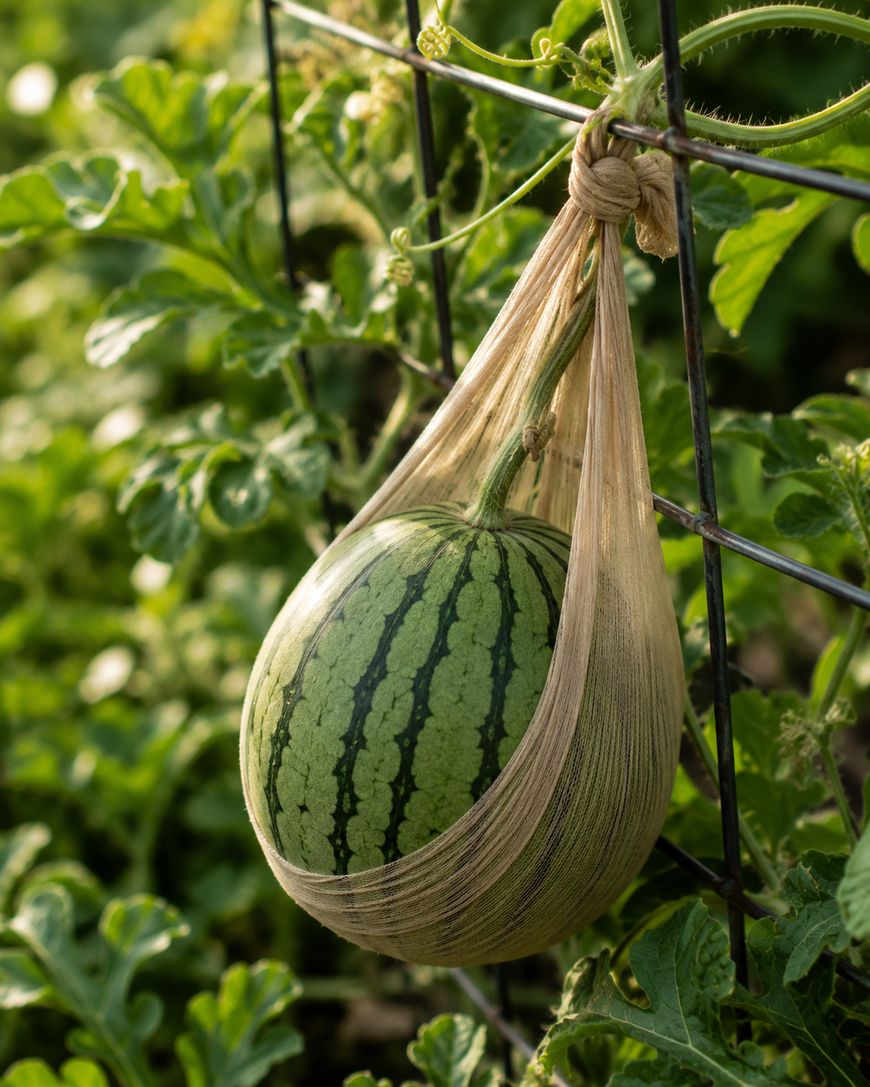
Trellising also helps you get more out of a small space. Instead of letting one plant take over six or eight square feet of ground, you can grow upward and fit more plants in the same footprint. Vertical watermelons tend to ripen more evenly too, because the fruit gets sun exposure from all sides rather than sitting flat on warm soil.
There is one key thing to keep in mind: watermelons are heavy. Unlike cucumbers or pole beans, a mature watermelon can weigh anywhere from five to thirty pounds, which means your trellis needs to be strong and your fruits will need support slings. We will cover both of those things in detail throughout this guide.
Trellis Idea 1: Classic A-Frame Trellis
The A-frame trellis is probably the most popular option for growing watermelons vertically, and for good reason — it is sturdy, simple to build, and works beautifully for small to medium-sized varieties. You build two angled panels of netting or wire and lean them together at the top to form the letter “A,” then plant on both sides.
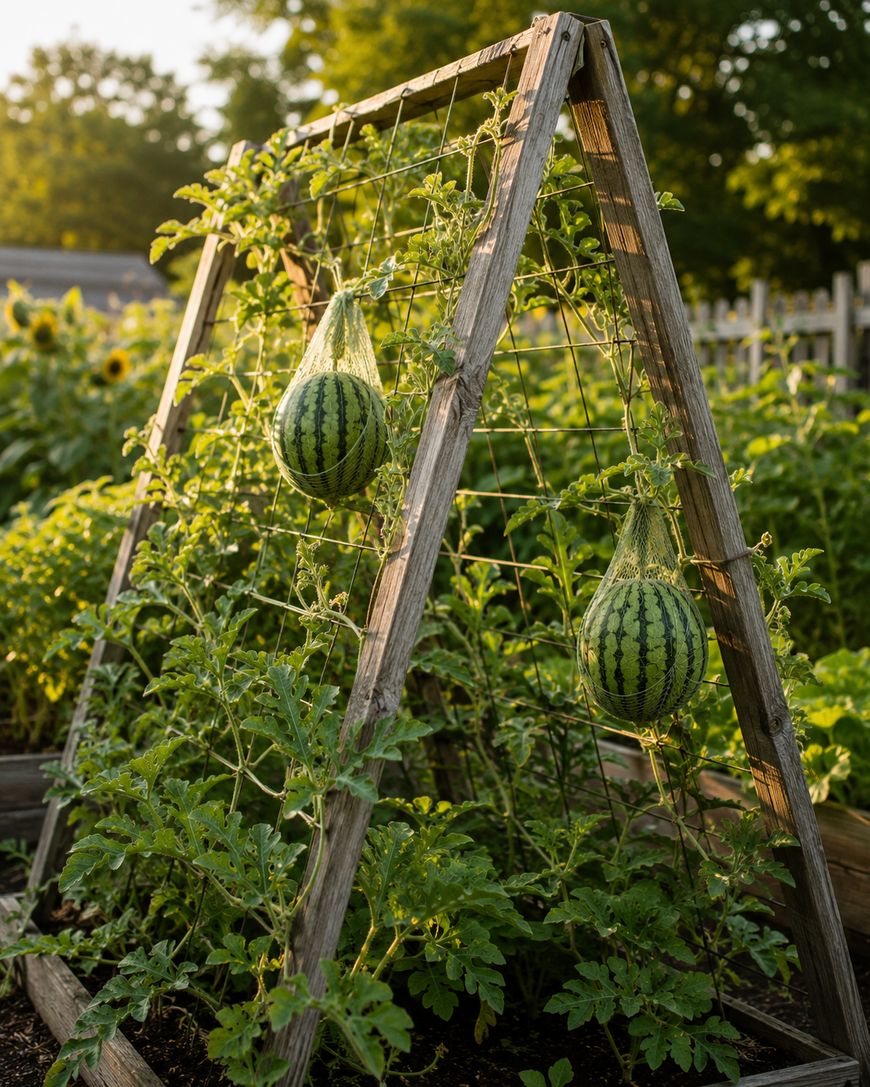
This design naturally distributes the weight of the fruit across both panels, which makes it more stable than a flat vertical trellis. You can build an A-frame from wood, PVC pipe, or metal conduit, and stretch garden netting or galvanized wire mesh between the frames. Aim for a height of at least five to six feet so the vines have plenty of room to climb.
The main advantage here is portability — at the end of the season, an A-frame can be folded flat and stored until next year. Many gardeners keep the same A-frame for a decade or more with just minor repairs. Plant your watermelons about two to three feet apart at the base of each panel, and guide the tendrils onto the netting as they grow.
Trellis Idea 2: Cattle Panel Arch
A cattle panel arch is one of the most satisfying watermelon trellis ideas you can build, and it doubles as a stunning garden feature. Cattle panels are heavy-gauge wire fencing panels that are typically sixteen feet long and four to five feet wide. When you bend one into an arch and secure each end in the ground, you get a beautiful tunnel trellis that is incredibly strong.
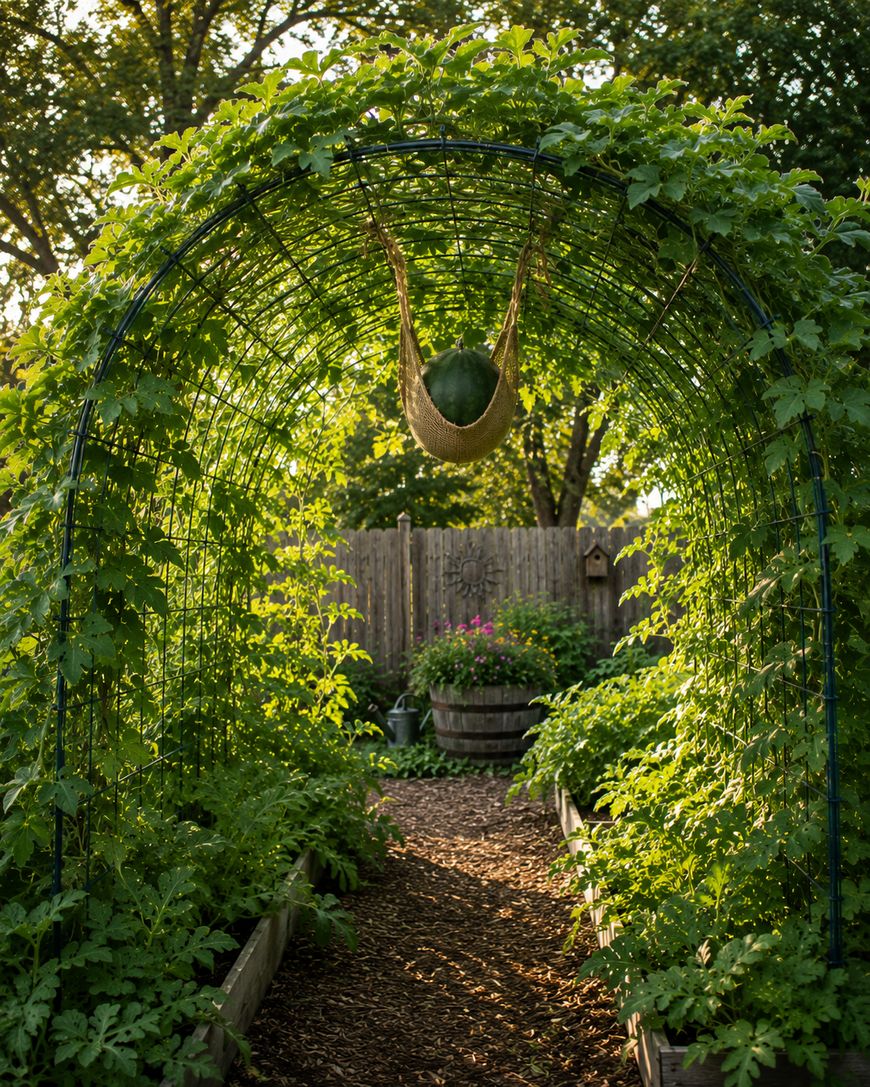
The arched shape is ideal for heavy fruits because the weight pulls straight down rather than outward, reducing stress on the frame. You can walk right through the tunnel as you work, which makes watering, checking for pests, and harvesting much more comfortable. These arches also look gorgeous in the garden, especially once the lush green vines fill in.
Setting up a cattle panel arch takes two people and a little muscle, but once it is in place, it will last for years. Drive T-posts or rebar into the ground on each side to anchor the ends securely. Plant your watermelon seedlings along both sides of the arch and they will naturally begin climbing once they find the wire.
Trellis Idea 3: DIY PVC Pipe Trellis
If you want a budget-friendly and lightweight option, a DIY PVC pipe trellis is one of the most practical watermelon trellis ideas on this list. PVC is inexpensive, easy to cut with a hacksaw, and available at any hardware store. You can build a simple rectangular frame and attach garden netting across it for a clean, functional trellis that handles vines well.
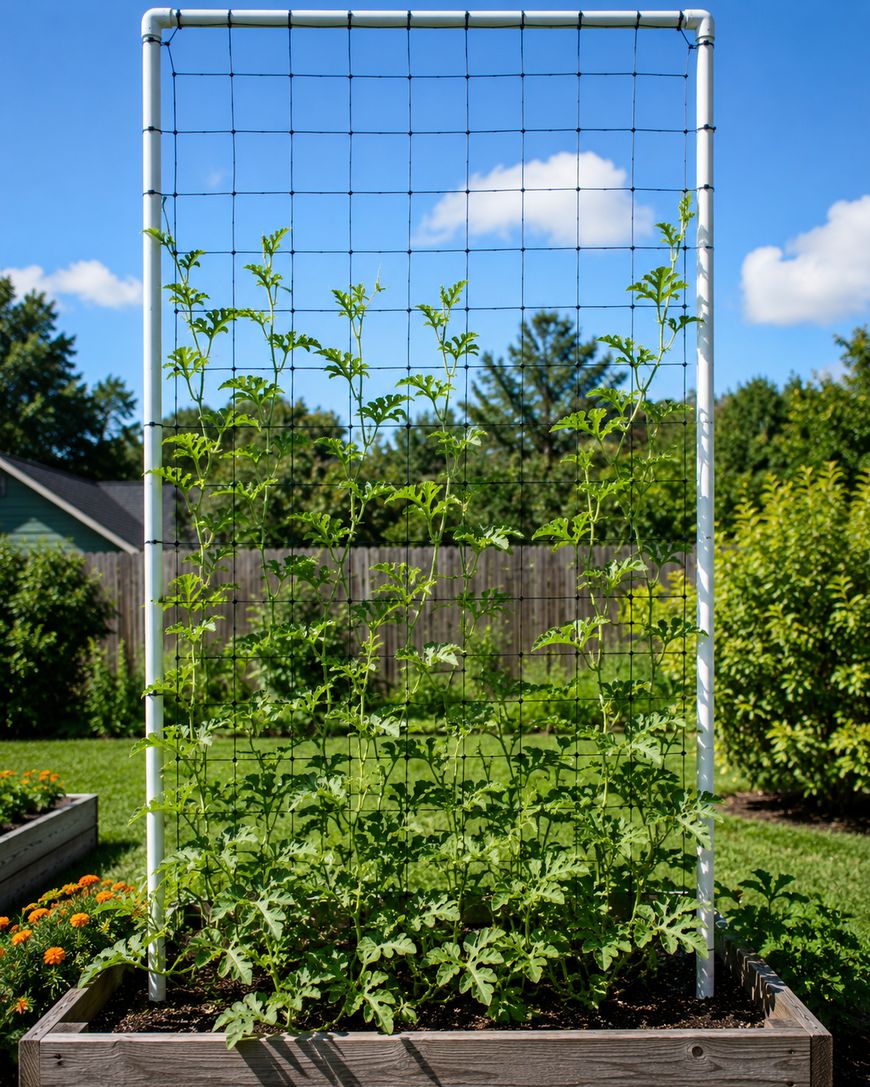
The downside to PVC is that it is not as rigid as metal or wood, so you will need to add cross-bracing if you are growing larger varieties. A half-inch pipe works fine for small watermelons like Sugar Baby, but go up to three-quarter or one-inch diameter pipe for anything bigger. Anchor the posts at least twelve inches into the soil to keep the whole structure from tipping when fruit gets heavy.
One great trick with PVC trellises is painting them black before installation. The dark color absorbs heat and warms the soil around your plants slightly, which watermelons love. It also makes the trellis blend into the garden backdrop so the lush vines take center stage.
Trellis Idea 4: Wood Post and Wire Trellis
A wood post and wire trellis is the classic garden structure that never goes out of style, and it works extremely well for watermelons. You drive sturdy wooden posts — four-by-four or six-by-six lumber works best — into the ground and string heavy-gauge wire between them at six to eight inch intervals. The vines weave through the wire as they grow, and the whole thing is strong enough to support substantial fruit.
This style is especially good if you are growing watermelons in a row along a fence line or garden border. Space your posts six to eight feet apart and make sure they are at least two feet deep in the ground for stability. The wire spacing lets you tie slings easily and gives you good visibility of the fruit as it develops.
Cedar and black locust are the best wood choices for outdoor use because they are naturally rot-resistant. You can also use treated lumber, though some gardeners prefer to avoid it in food gardens. This type of trellis tends to become a semi-permanent fixture in the garden, which is a good thing — once it is built, you barely have to think about it again.
Trellis Idea 5: Repurposed Wooden Ladder
A repurposed wooden ladder is one of those charming watermelon trellis ideas that looks like it came straight from a farmhouse garden magazine. An old ladder propped against a fence or wall gives vines a series of horizontal rungs to climb, and the spacing is usually just about right for weaving tendrils through.
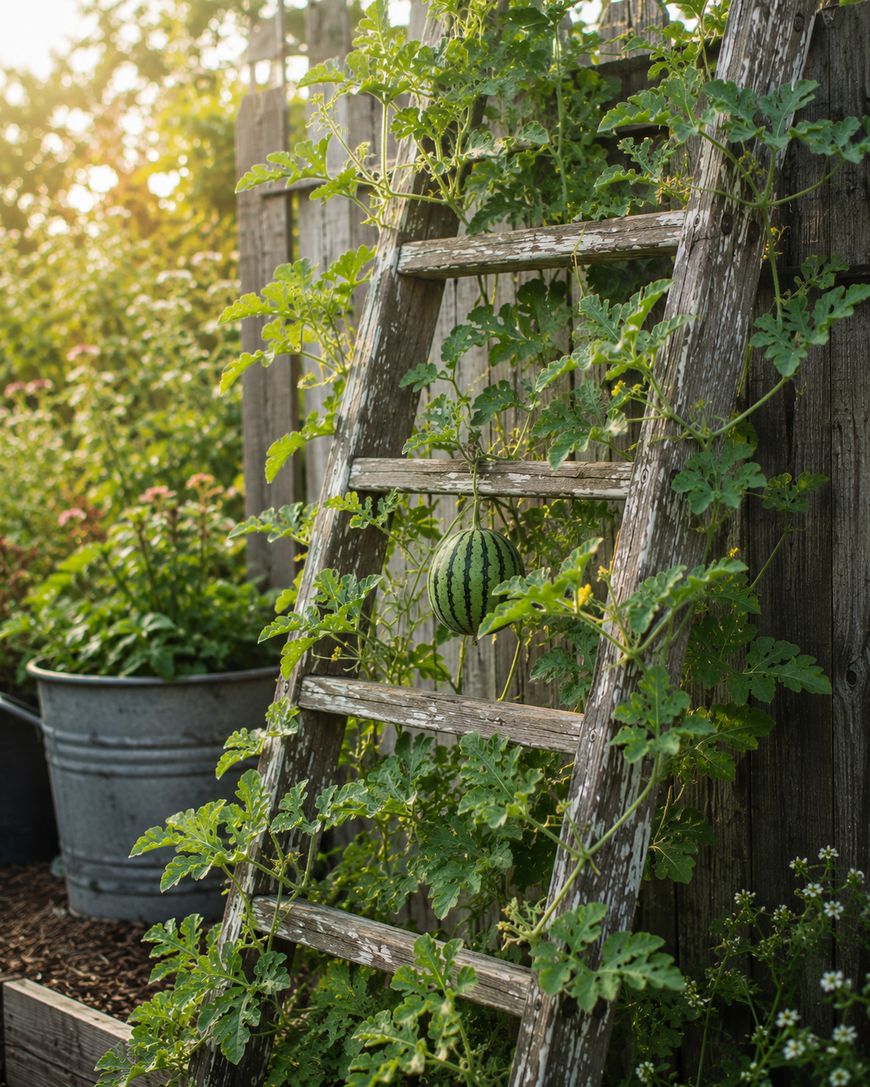
This works best for small watermelon varieties since a ladder does not offer the depth of a purpose-built frame. Lean it against something solid, or anchor the base with tent stakes driven into the soil on each side. You can enhance it by adding twine or netting between the rungs for more climbing surface.
The appeal of this option goes beyond practicality — it adds real visual character to the garden. Even before the vines fill in, a weathered wooden ladder has its own rustic warmth. At the end of the season, it is easy to move and store, or leave in place as a garden decoration through fall.
Trellis Idea 6: Bamboo Teepee Trellis
A bamboo teepee is one of the most natural-looking watermelon trellis ideas you can put together, and it is extremely simple to build. You gather five to eight bamboo poles, push them into the ground in a circle, and tie the tops together to form a conical shape. Wrap twine or netting around the outside and your climbing surface is ready.
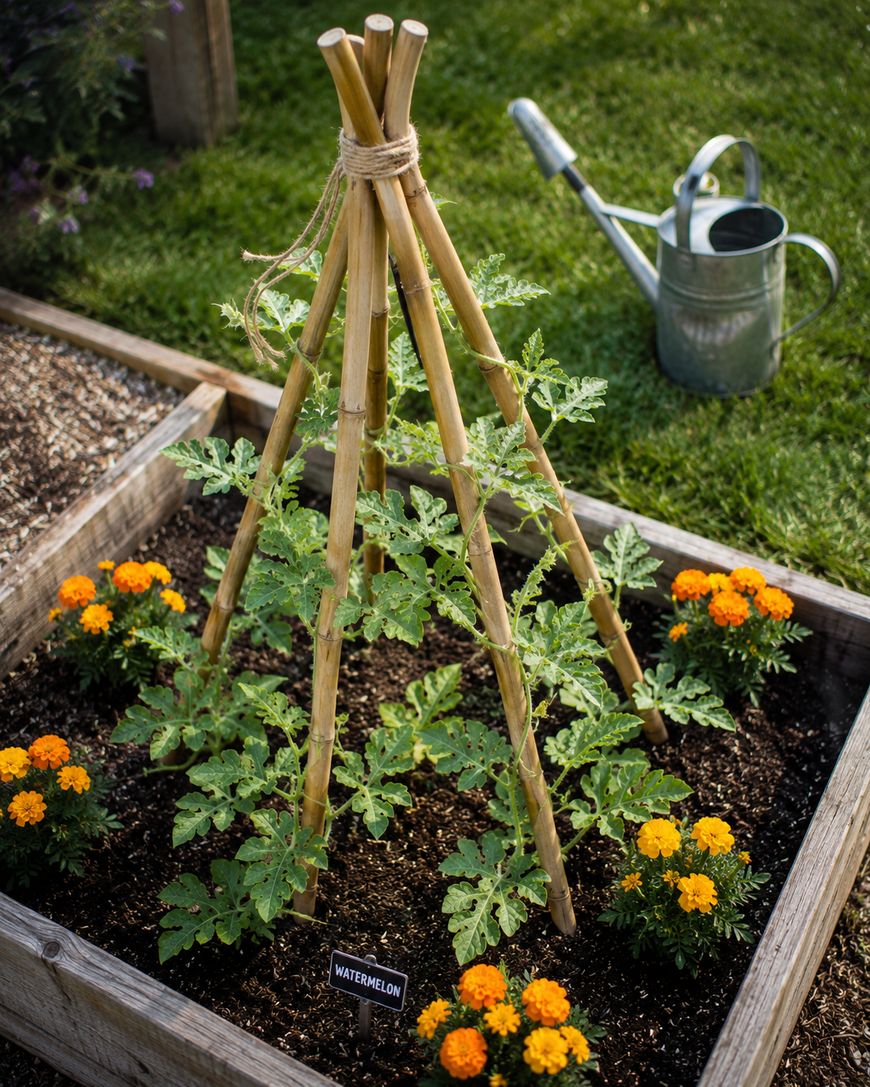
Teepees work best for dwarf or compact watermelon varieties because they offer less overall climbing height than a flat trellis or arch. The structure is surprisingly strong when you use poles at least an inch in diameter, and bamboo is naturally weather-resistant. You can also plant a few companion herbs or flowers around the base to make it a full little garden vignette.
One of the best things about a bamboo teepee is how fast it goes up. You can have one fully assembled in under thirty minutes, which makes it a great option if you want to get plants in the ground quickly without a big building project.
Trellis Idea 7: Chain Link Fence Section
If you have a section of chain link fencing available, you already have one of the strongest possible watermelon trellis ideas at your disposal. Chain link is incredibly rigid and the diamond-pattern openings are easy to thread slings through when your fruit needs support. Even very large watermelons feel secure when cradled against a chain link panel.
You can install a free-standing section using fence posts, or simply use an existing chain link fence along the edge of your property. The only real downside is aesthetics — chain link is not exactly charming — but once the vines grow in, you will barely notice the metal underneath all that greenery.
Chain link also holds up in wind better than lighter netting options, which matters if you live in an area with summer storms. The vines will weave themselves through the links on their own with very little guidance, which saves you time as the season progresses.
Trellis Idea 8: Wooden Pallet Trellis
A vertical wooden pallet makes a surprisingly effective watermelon trellis, especially for smaller varieties. You set the pallet upright, secure it with stakes or by attaching it to an existing fence, and let the vines climb through the slat openings. The built-in spacing works naturally, and the wide boards give you plenty of anchor points for tying slings.
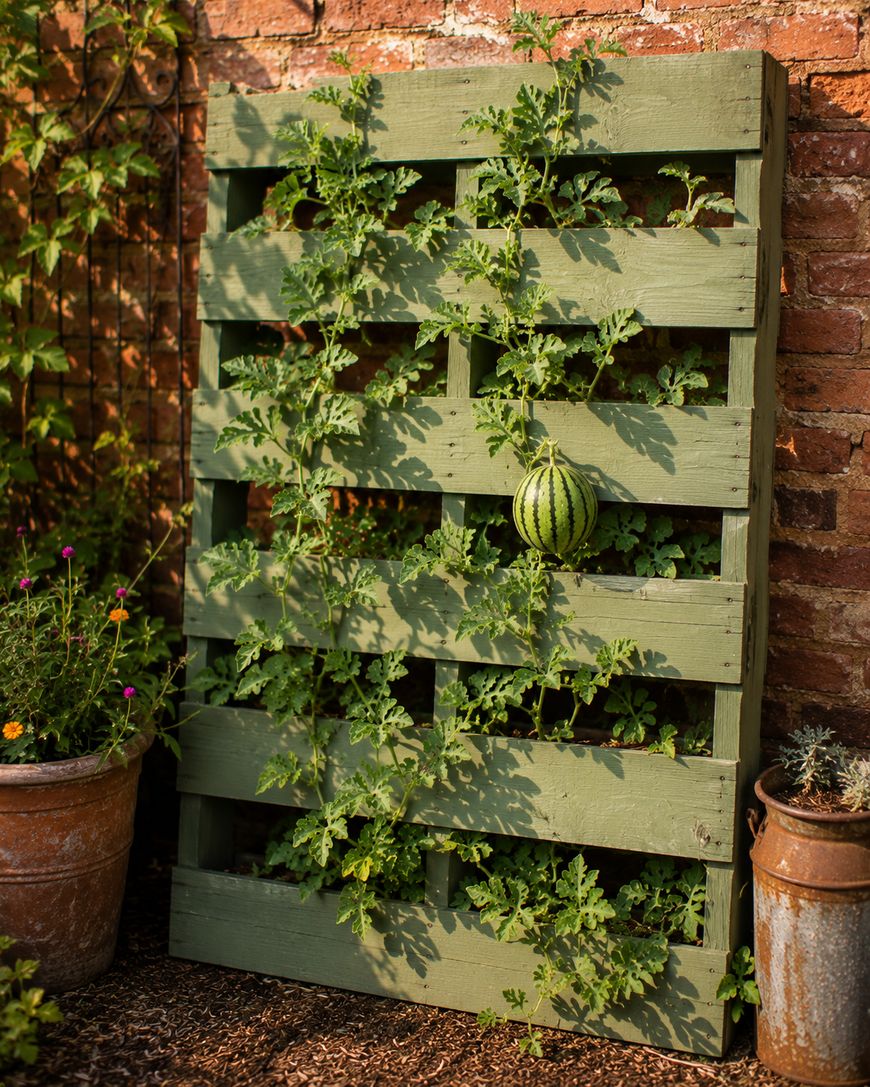
Pallets are usually free or very inexpensive, which makes this one of the most budget-friendly watermelon trellis ideas on the list. Make sure you choose heat-treated pallets (marked HT) rather than chemically treated ones for use in a food garden. Sand any rough edges to protect your vines and hands.
You can stack two pallets vertically for extra height, or paint them a fun color to make them a decorative feature of your garden space. At the end of the season, pallets can be repurposed for other garden projects or used to make a simple compost bin.
Trellis Idea 9: Metal T-Post and Cattle Wire Panel
Combining metal T-posts with a flat panel of cattle wire is one of the most heavy-duty watermelon trellis ideas you can build, and it is ideal for large or long-season varieties. T-posts are inexpensive, easy to drive into the ground with a post driver, and extremely stable. Stretch a cattle wire panel between two or three posts and you have a trellis that will not budge even when loaded with fruit.
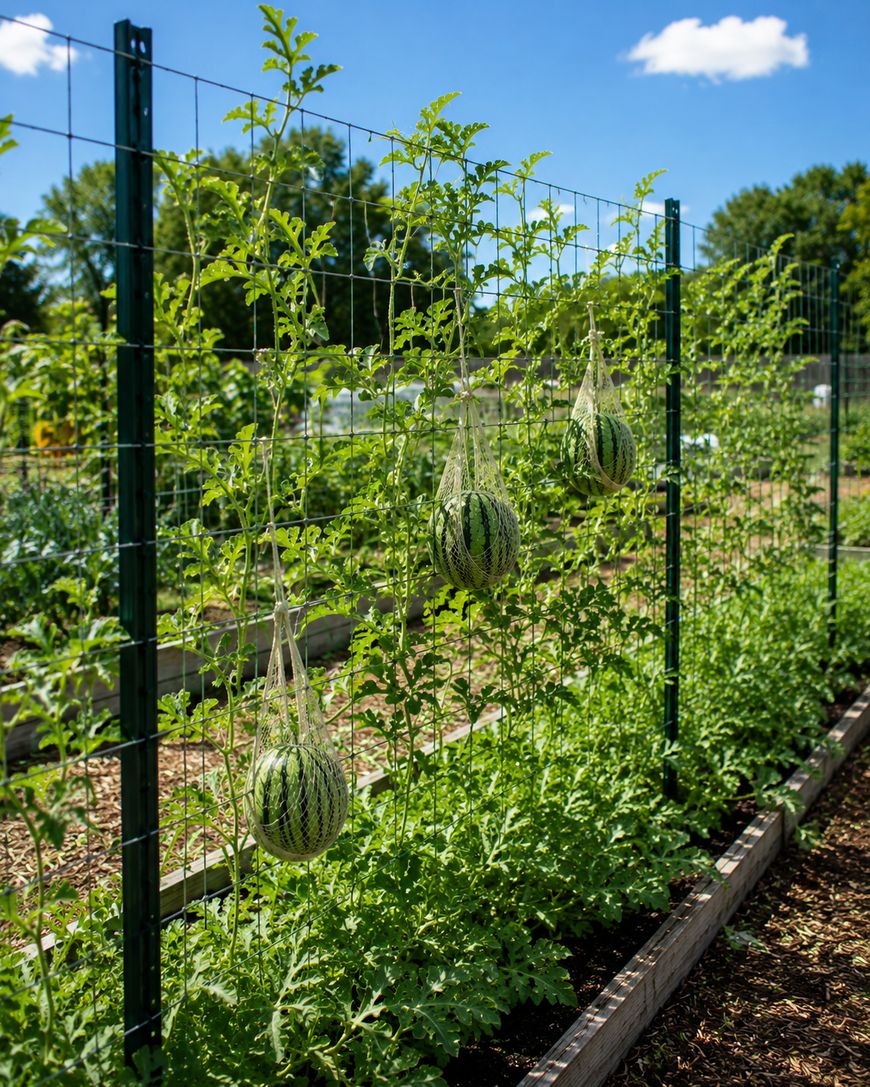
This setup is especially popular with market gardeners who grow in rows, because you can set up a long continuous trellis and plant along its entire length. The wire openings are large enough to slip slings through easily and still let good airflow around the fruit. It also makes it simple to attach drip irrigation along the base of the trellis.
The investment in T-posts pays for itself quickly because they last almost indefinitely. Pull them at the end of the season, store them in a dry place, and they are ready to go again next spring.
Trellis Idea 10: Garden Arch or Arbor
A decorative garden arch or arbor is one of those watermelon trellis ideas that serves double duty beautifully — it is both functional and stunning. A metal or wood arbor placed along a garden path lets watermelon vines climb up and over, creating a lush green tunnel that is genuinely magical to walk through. You can find affordable metal arches at garden centers or online, and they go up in minutes.
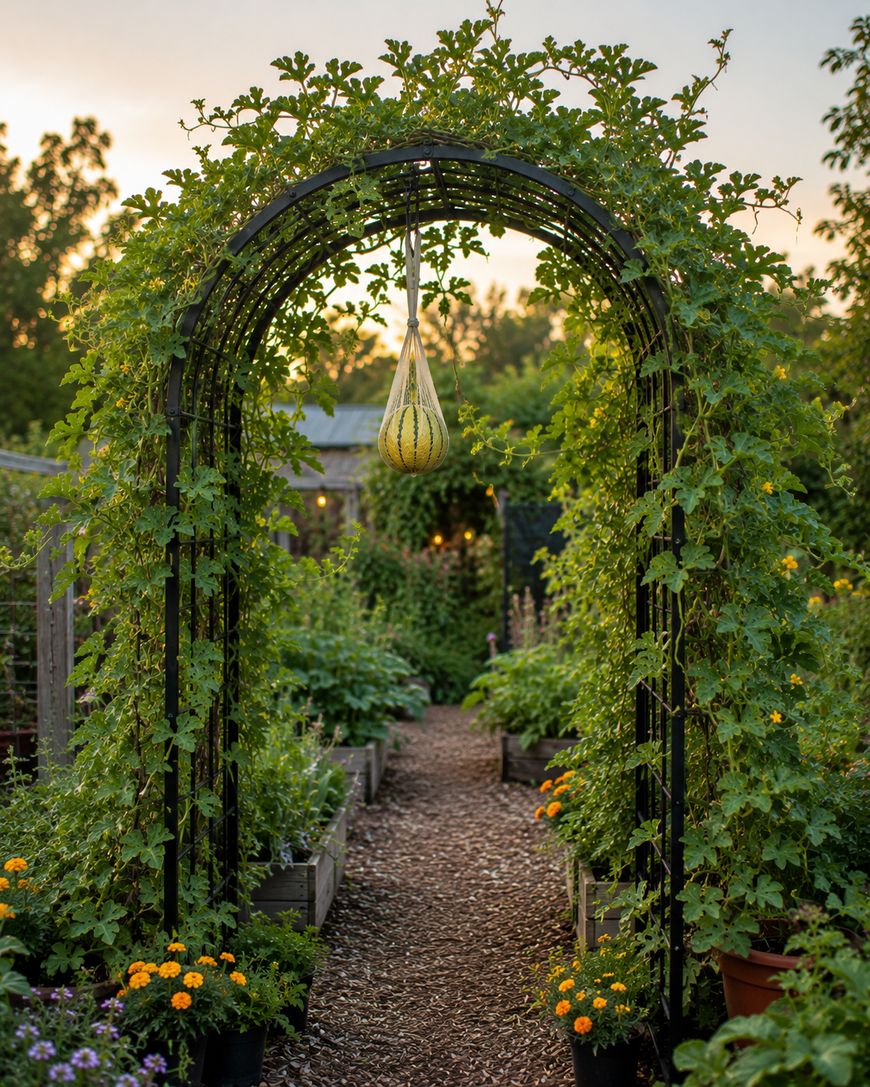
For this to work well, you need to add netting or twine to the arch because most decorative arbors do not have enough horizontal support for vines on their own. Attach garden netting to the sides and top of the arch so the tendrils have plenty to grab onto. Plant one or two vines at each base of the arch and train them upward as they grow.
The result is a show-stopping garden feature that your neighbors will absolutely ask about. Stick to smaller watermelon varieties for this setup, and use mesh produce bags or pantyhose slings to support the fruit as it develops.
Trellis Idea 11: Cattle Panel Lean-To Against a Fence
If you have a fence along your garden, propping a cattle panel against it at an angle creates a natural lean-to trellis that is both strong and space-efficient. The panel rests against the fence at a forty-five degree angle, giving vines a climbing surface that is partially shaded and partially in sun — which can actually extend your growing season in hot climates.
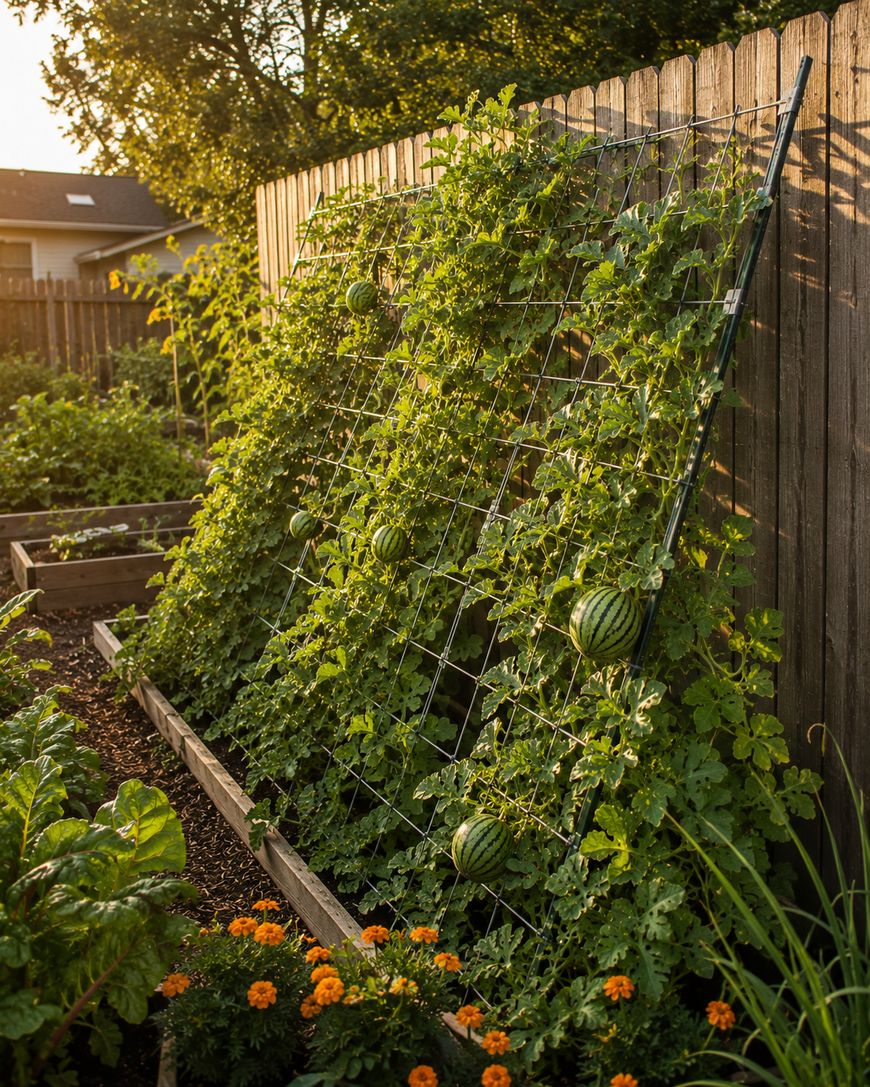
This works especially well on a south or east-facing fence where the morning sun reaches the base of the plants. The lean-to angle also makes it easier to see and reach the fruit since it hangs away from the fence at a convenient angle. Anchor the base of the cattle panel with stakes or sandbags so it does not slide inward.
You can cover two or three linear feet of fence with a single cattle panel, making it one of the most space-efficient watermelon trellis ideas in this guide. It is also quick to set up and requires no construction skills whatsoever.
Trellis Idea 12: String and Stake Trellis System
The string and stake trellis system is the simplest watermelon trellis idea of all, and it costs almost nothing to set up. You drive sturdy wooden or metal stakes into the ground at regular intervals and string heavy jute twine or garden wire horizontally between them at intervals of about eight to ten inches. The result is a multi-tier horizontal trellis that is surprisingly effective for small and medium varieties.
This works best as a temporary or single-season setup since jute twine is not permanent. At the end of the season, you can simply pull the stakes and compost or discard the twine, leaving almost no cleanup. It is a great option for gardeners who want to try vertical growing before investing in something more permanent.
Use at least three horizontal lines of twine — one near the ground to guide early growth, one at mid-height, and one near the top. Weave the vines through the lines as they grow and they will find their own way upward with just a little encouragement.
How to Make Watermelon Slings
No matter which of these watermelon trellis ideas you choose, you will need slings to support the fruit once it starts to develop. Without support, the weight of a growing watermelon can snap the vine right where it attaches to the fruit, which is heartbreaking after weeks of tending your plants.
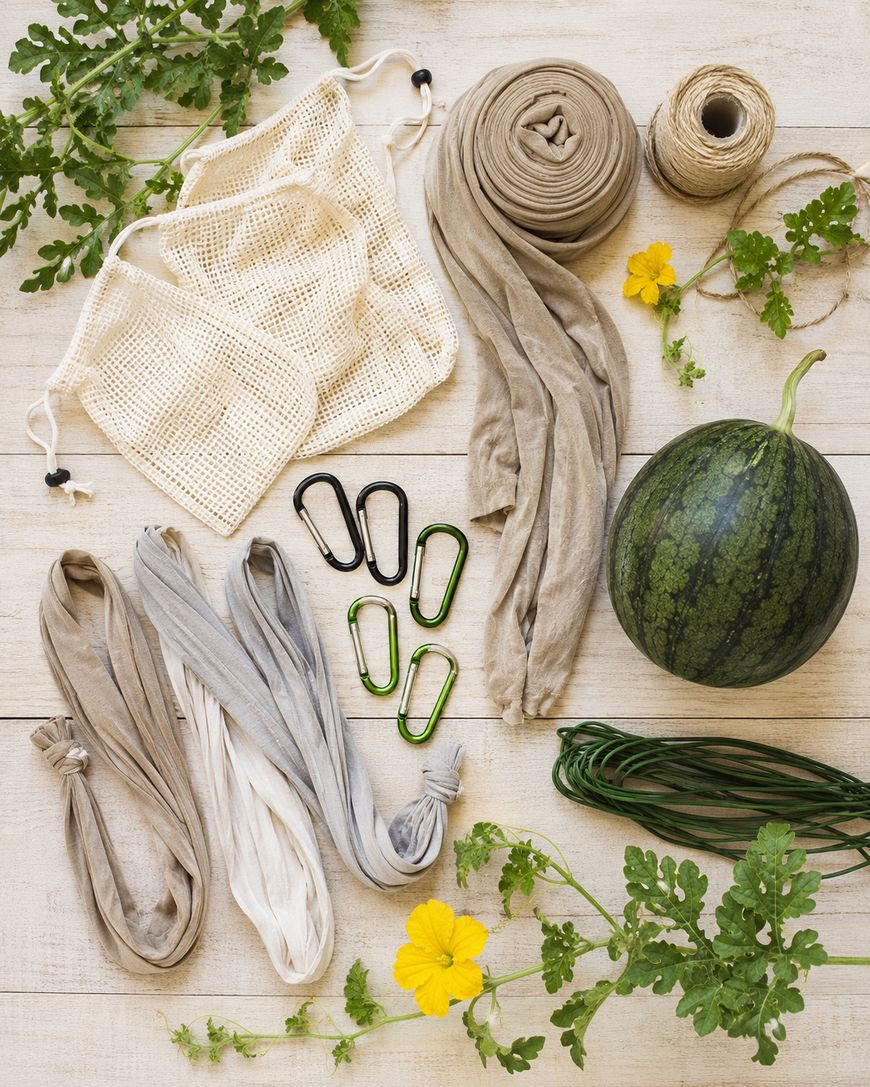
The simplest sling is made from a mesh produce bag, a section of old pantyhose, or a piece of stretchy fabric tied loosely around the fruit and attached to the trellis above. The sling should cradle the fruit gently without constricting it, and it needs to be able to expand as the watermelon grows. Check your slings every few days and adjust as needed.
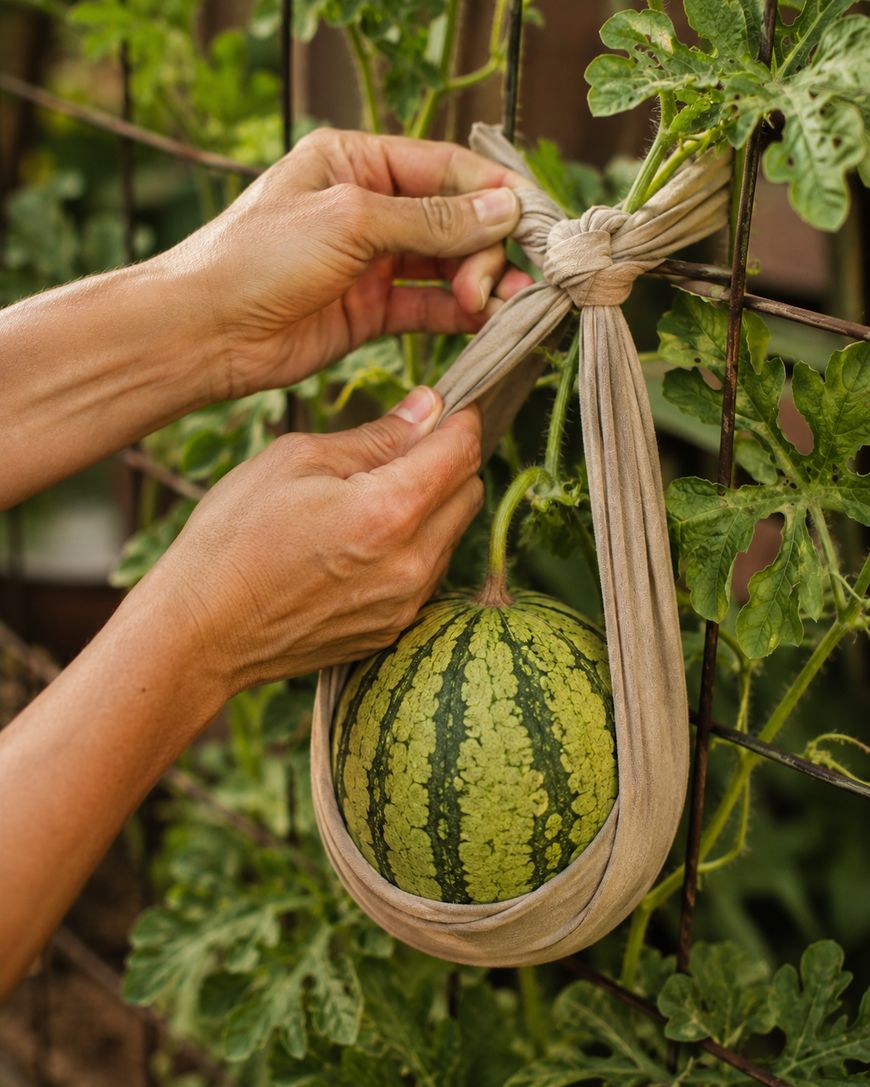
You can also purchase ready-made fruit slings at garden supply stores, which are designed specifically for large fruits and work very well. Whatever material you use, make sure there is good airflow around the fruit to prevent rot and encourage even ripening.
Best Watermelon Varieties for Trellising
Choosing the right variety makes all of these watermelon trellis ideas much easier to execute. Small and icebox varieties are naturally better suited for vertical growing because they produce lighter fruit that puts less stress on the trellis and slings.
Sugar Baby is probably the most popular trellising variety — it tops out around eight to twelve pounds and has a compact vining habit. Bush Sugar Baby is even more manageable and works well on a small A-frame or pallet trellis. Petite Treat, Mini Love, and Orangeglo are other compact varieties worth trying on any of the structures in this guide.
If you want to try larger varieties on a trellis, go for it — just make sure your structure is extremely sturdy and your slings are generously sized. Many gardeners successfully trellis varieties in the fifteen to twenty pound range with the right setup.
Q&A: Your Watermelon Trellis Questions Answered
Can all watermelon varieties grow on a trellis?
Most varieties can be trellised, but smaller icebox types like Sugar Baby are much easier to manage vertically. Larger varieties up to about twenty pounds can work if you have a very sturdy trellis and well-made slings, but anything over that is really best left on the ground.
How tall does a watermelon trellis need to be?
Aim for at least five to six feet of height for most varieties. Watermelon vines can easily reach ten to fifteen feet long, so you want enough vertical space for the plant to climb before it needs to be redirected horizontally.
Do I need to tie watermelon vines to the trellis?
You do not need to tie every tendril, but some guidance in the early weeks helps a lot. Use soft garden tape, strips of old t-shirt, or twist ties loosely around the vine to point it toward the trellis. Once the plant finds the structure, the tendrils will grip on their own.
When should I add fruit slings to my watermelons?
Add slings when the watermelon is about the size of a tennis ball. At that point it is big enough to sit in a sling comfortably but light enough that the vine has not been stressed yet. Check and adjust the slings regularly as the fruit grows.
How far apart should I plant watermelons on a trellis?
Space plants two to three feet apart along the base of the trellis. This gives each vine enough room to spread without competing too heavily with its neighbors for nutrients and light. Crowding leads to smaller fruit and more disease pressure.
Can I trellis watermelons in containers?
Yes, but you need a large container — at least fifteen to twenty gallons — and a compact variety. Place the container next to a fence or trellis structure and train the vine to climb from there. You will need to water more frequently since containers dry out faster than garden beds.
Conclusion
These 12 watermelon trellis ideas give you everything you need to start growing your melons vertically this season. Whether you go with a simple string and stake system or build an impressive cattle panel arch, trellising transforms the way you garden — and the way your watermelons grow.
Pick the style that fits your space and budget, choose a compact variety if this is your first time trellising, and do not forget to plan for fruit slings from the start. Your watermelon trellis ideas do not have to be complicated to be effective — they just need to be strong, well-anchored, and tall enough to give your vines room to shine.